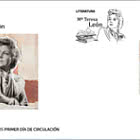
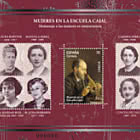
Born in Logroño in 1903, María Teresa León was a writer, essayist, playwright, and cultural activist deeply committed to social justice, feminism, and the republican cause. Associated with the Generation of '27, she was part of the group of intellectuals known as "Las Sinsombrero," along with figures such as María Zambrano, Rosa Chacel, and Maruja Mallo, who challenged the social norms of their time to vindicate the role of women in Spanish cultural and political life. She began her literary career under the pseudonym Isabel Inghirami and in 1929 published her first book, Cuentos para soñar (Stories to Dream). During this time, she met the poet Rafael Alberti, with whom she shared a life, political commitment, and exile. Together, they founded the magazine Octubre, a militant publication serving revolutionary culture. During the Civil War, León stood out for her work preserving artistic heritage—particularly as head of the Board for the Protection of Artistic Treasures—and after the Republican defeat, she embarked on a long and painful exile that took her to France, Argentina, and Italy.
Despite her tireless literary output—including short stories, novels, memoirs, and plays—her figure was overshadowed by that of her husband, whom she supported and assisted in the dissemination of his work, relegating her own to a secondary role. Her most emblematic book, Memoria de la melancolía (1970), is an intimate and lucid account of her life, her generation, and her exile, a chronicle written with political sensitivity and depth. She returned to Spain in 1977, already suffering from advanced Alzheimer's, and died in 1988 without having received the recognition she deserved. It wasn't until 2015, with the RTVE documentary "Las Sinsombrero," that her name and that of other colleagues began to occupy their rightful place in the history of Spanish culture. Today, thanks to the work of recovering her legacy—also driven by her daughter Aitana Alberti—María Teresa León is recognized as one of the great silenced intellectuals of exile, a pioneer in the fight for equality, and an essential figure in understanding the role of women in 20th-century culture.