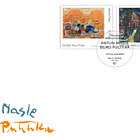
Antun Masle – Orašac
Antun Masle (Orašac, 1 September 1919 – Dubrovnik, 20 August 1967) is a modern painter of coloristic expression from Dubrovnik, who, despite having passed away too soon, achieved an impressive oeuvre. He received informal lessons in Dubrovnik from Kosta Strajnić (1887–1977), a painter, art theorist, conservator, museologist and an important figure for the development of modern art in Dubrovnik. He studied at the Academy of Fine Arts in Zagreb between 1938 and 1942, and after returning to Dubrovnik he was engaged in teaching work for the remainder of his life. His painting, in terms of its significance, belongs to the corpus of national painting, as do the opuses of Ivo Dulčić (1916–1975) and Đuro Pulitika (1922–2006), his Dubrovnik peers, with whom he shared friendship and a tendency towards a coloristic and expressionist style.
In his portraits, landscapes, still lifes, depictions of animals, Antun Masle uses color in a way that is related to the Fauvist principles, especially in his earlier works. The painting "From Orašac", created in 1944, during the painter's early period, shows a typical country house with a gentle Mediterranean landscape, interpreted through bright colors and simplified shapes. Dense layers of paint, which in later paintings grow into voluminous, almost three-dimensional structures, are one of the main characteristics of Masle's painting. In the second half of the 1950s, he was fond of framing his forms in black, similar to Georges Roualt and Milan Konjović, with whom he came into contact through the informal school of Kosta Strajnić.
At the start of the 1960s, in terms of layering and tactility of the painting surface, he was leaning towards art brut, which he encountered while visiting Paris. Some of Masle's typical subjects are Dubrovnik interiors with the motif of a "picture in a picture", which he intensively painted in the later period from 1962 to 1967, achieving a rich coloristic harmony and silent, but intense communication of inanimate things. Simplification of form and stylization of shapes in Masle's paintings are equally the result of his artistic upbringing on the achievements of modern artistic directions and of his sensitive nature, playfulness close to children's imagination and a poetic experience of the world.
Rozana Vojvoda
Museum Advisor
Art Gallery Dubrovnik
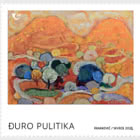
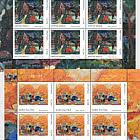
Đuro Pulitika – Spring Landscape
Đuro Pulitika (Bosanka, village above Dubrovnik, 26 January 1922 – Dubrovnik, 14 December 2006) is a modern painter of a recognizable strong coloristic expression from Dubrovnik, whose creativity has made a special contribution to Croatian landscape painting. On two occasions, he attended the Academy of Fine Arts in Zagreb (1941–1943 and 1945–1947), after which he returned to his hometown. He continued his education at the Art School in Cetinje, which he completed after its relocation as the School of Applied Arts in Herceg Novi in 1950. The themes of his native region and the Mediterranean landscape are the cornerstones of his expression, with a special emphasis on his hometown area. In doing so, he uses saturated and warm color tones: red, orange, yellow, blue, green, purple. In color-intensive works, the most common are representations of landscape variations, with contouring of forms, most often present in black. He often uses the forms of a circle and a semicircle, particularly to shape trees, hills, but also female figures, often integrated into the interior. Color and light in Pulitika's distinctly authentic style are not in the service of imitating reality, but are used as tools for shaping forms and achieving psychological characterization, as well as creating emotional charge in the painting. In his depictions of interiors, the author does not present an actual space, but rather builds an introspective space, filled with nostalgia, memories, a meditative quality. The characters are typified and are usually female figures and nudes, black cats, figures of grandfathers and captains, inspired by people from his own family history, but there are empty interiors as well. Objects in the depicted interiors play the role of a narrator, so a compass, a picture, a globe, a lamp tell a story of the life of the person using the space. In his religious works, two of the most common representations stand out – the crucifixion of Christ and the mourning of Christ. Such religious representations are embedded in the landscape, most often with the hint of a hill, in a spot far removed from populated places.
Jelena Tamindžija Donnart
Curator
Art Gallery Dubrovnik