The hedgehog, animal of the year 2026
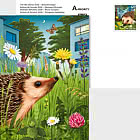
Pro Natura has selected the European hedgehog as animal of the year in 2026. This prickly beast is always a welcome guest in our gardens and green spaces but it needs protection.
At the moment, they’re buried deep under piles of leaves. Whether they’re actually sleeping, we don’t know. But as soon as temperatures rise again, hedgehogs will come out of their hibernation and start roaming through our gardens, parks and meadows again. Few other wild animals are as beloved as the hedgehog, despite or maybe even because of its spines. To ensure that it can carry on living in our neighbourhoods, it needs suitable hiding places. In many parts of the countryside, these have disappeared, which is why hedgehogs are increasingly living in built-up areas.
An old acquaintance
Hedgehogs have existed for over 15 million years, long before humans were walking the earth. They have survived ice ages and coexisted with mammoths. Following the end of the last cold period around 20,000 years ago, hedgehogs returned to Switzerland from southern Europe. The variety found in this country is known by the zoological name of “European hedgehog” (Erinaceus europaeus).
Prickly but still cute
The hedgehog’s most distinctive feature is its 5,000 to 7,000 spines, stiff hairs that turn it into an almost impenetrable ball in the face of danger. Newborns are initially blind and deaf, but they have around 100 white spines that emerge shortly after their birth. At two weeks old, they open their eyes and ears, and after around six weeks, they become independent and have to gain weight in order to survive their first winter.
Potentially endangered
As you might have guessed, the hedgehog’s name comes from its love of hedgerows and thick vegetation. But many of its natural refuges have now disappeared from the countryside: hedges, copses and species rich meadows have given way to uniform agricultural spaces. In urban areas, meanwhile, hedgehogs face obstacles such as sealed surfaces, gravel gardens, fences with no gaps to pass through and road traffic. Thousands of hedgehogs fall victim to cars or mowers every year. No wonder, then, that they’re at risk: since 2022, they have been classified as potentially endangered in Switzerland.
A useful cohabitant
To help hedgehogs, we should make sure gardens, parks and green spaces aren’t too sterile. They will reward us twice over for our efforts firstly, as useful cohabitants who eat snails and insects night after night, helping to maintain ecological balance in our gardens, and secondly, as a symbol of living, species rich neighbourhoods. By protecting them, we will also be protecting countless other animals, from ground beetles to butterflies. And we’ll still have the pleasure of encountering a hedgehog plodding across the grass at dusk.