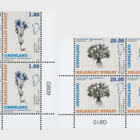
Greenland is home to more than 520 native plant species. There are also around 200 imported species such as lupine, Siberian poppy and European dandelion species.
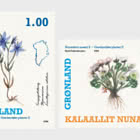
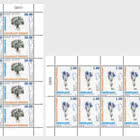
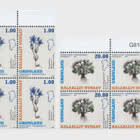
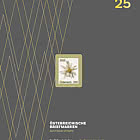
We have reached the second part in our series ‘Greenlandic plants’. Female artist Buuti Pedersen continues to be behind the entire plant themed series. Greenland’s flora is incredibly diverse. From lush scrublands and vibrant flower meadows to sparse vegetation on rocky terrains and steppes. There are numerous different plant communities and habitats in Greenland, each characterised by an extensive array of plants and flowers. The two plants depicted in this second part of the series are Arctic Felwort and Glacial Buttercup. seen as a charming little blue flower that often grows together with other typical Arctic plants. Like other species in the Gentian family, it is renowned for its delicate blue flowers. Arctic Felwort grows up to 5–15 cm with 2–3 cm long leaves. It is indicative of the hardy plants that survive in Greenland’s harsh climate, often alongside other unique species.
Glacial Buttercup
Ranunculus glacialis, Glacial Buttercup is widely found in both low and high Arctic regions and is a species that thrives in harsh Arctic conditions, often in snow and glacier areas, even extraordinarily existing in East Greenland. It is a small perennial herb, 5–20 cm tall, with shiny, fleshy, deeply lobed leaves and large flowers that open white and gradually turn reddish with age. During the brief Arctic summer, these blossoms attract pollinators active in the harsh environment. It is a typical example of Greenlandic flora, capable of surviving extreme conditions, making it an intriguing feature of the country’s unique natural landscape.