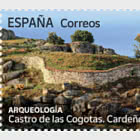
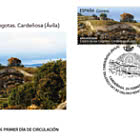
The Cogotas hill fort is one of the major Vettonian settlements in the province of Ávila, which is notable for the importance and number of Iron Age sites within its territory, significant examples of pre-Roman culture. This Celtic settlement and its necropolis, located on the Cogotas hill next to the Adaja River, in the municipality of Cardeñosa, just a few kilometers from the capital, reached its peak between the 5th and 3rd centuries BC.
Its elevated position, amidst lush holm oak forests, and its proximity to the river and flat, fertile pastureland, ideal for agriculture and livestock farming, made it a perfect location for settlement. Discovered in 1876, excavations at the site have identified two periods of occupation: one between 1200 and 800 BC, coinciding with the Late Bronze Age, known as Cogotas I; And another, Cogotas II, between 400 and 100 BC, was inhabited by the Vettones, who abandoned the hill fort as a result of Romanization.
To the north of the hill fort lies the Trasguija necropolis, excavated by Cabré and clearly identified by the hundreds of granite stelae, now lying on their sides.
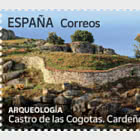
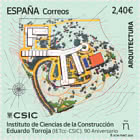
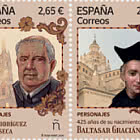
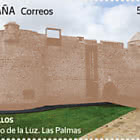
The Cogotas hill fort is protected by a double walled enclosure, clearly visible on the seal, and a field of upright stones to prevent cavalry from entering.
It has an Interpretation Center that thoroughly explains its features.