Landscape - Skard
| Set |
| Set CTO |
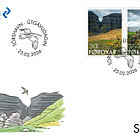
| First Day Cover |
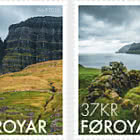
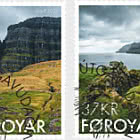
The island of Kunoy is characterized by a continuous high mountain range stretching from south to north. The only exception is the deep mountain gorge, Skarðsgjógv, which gave the settlement its name. Beneath the 800-meter-high mountains on the north-eastern side of the island lies the village of Skarð.
The village is accessible by boat, but the landing site is difficult to reach. However, there are two trails, one of which is very challenging, making the village relatively isolated. From Haraldssund to Skarð is approximately seven kilometres, and this trail is relatively easy to walk. The other trail is more demanding and extremely treacherous. It crosses the mountain gorge all the way to the village of Kunoy on the opposite side. The inhabitants of Skarð used this route when going to church or attending to errands in Kunoy, and they also carried coffins across the gorge to the cemetery in Kunoy.
Surrounded by mountains on one side and the sea on the other, the village of Skarð was closely tied to these powerful natural elements. Here, the residents made a living from whatever the land and sea could provide. People have lived here for centuries, but it is unknown who first settled in Skarð. What is known is that the village’s history ended on January 26, 1919.
From the earliest times, the original settlement was located elsewhere. In 1824, the village was severely damaged by a landslide and a flood. No one was harmed, but the residents were so frightened that they moved the houses about 100 meters further south.
In 1801, there were only three houses and 12 inhabitants, but the population grew to 31 people and six houses by the beginning of the 20th century.
The large, green, and fertile valleys surrounding Skarð provided good pastures for livestock, but grain cultivation was difficult because the area was shaded, limiting agricultural yields.
Fishing from Skarð has always been challenging, partly because the population was never very large, but mainly because the high cliffs separate the village from the sea. Skarð is one of the worst surf zones on the Northern Isles.
The village has repeatedly been struck by maritime accidents, and these tragic events highlight the dangers associated with life at sea.
On March 30, 1835, the men of Skarð went out fishing. Near the shore, a gust of wind caught the sail, and the boat capsized. None of the six men were found. Back in the village, four widows were left with eight fatherless and minor children.
In 1872, a large pod of whales was killed in Klaksvík. The men from Skarð also took part in the whaling. After butchering and dividing the whales, they rowed back to Skarð with their share, but near the landing site, there was heavy surf. They tried to reach the shore, but at that moment, a large wave capsized the boat, and all the men ended up in the sea. Some were rescued by holding onto the overturned boat, but three men died in this accident.
The last and largest boating accident in Skarð occurred on Christmas Eve, December 23, 1913. When they went out fishing early in the morning, the weather was good and the sea calm, but suddenly the wind changed direction, and a violent storm with whirlwinds and heavy snow and hail struck the unsuspecting men, who were fishing in small open Faroese boats on the open sea. Three fishing boats did not return that memorable Christmas Eve, and 19 men died at sea: six from the village of Kunoy, six from Norðdepil, and seven from Skarð.
This accident was the death blow for the village of Skarð. Only widows, a 70-year-old man, and a few small boys remained. The village could not afford to lose seven men in their prime. The first residents moved shortly after the disaster, and on January 26, 1919, the last families left the village. Since then, Skarð has been desolate. Most of the former inhabitants settled in Haraldssund.
The high school principal, author, and poet Símun av Skarði was born and raised in Skarð. Among other works, he composed the Faroese national anthem, “Tú alfagra land mítt”, the Christmas carol “Nú ringja kirkjuklokkur”, and the song “Á mønu hjalsins stari”, which was written in connection with the 1913 boating accident.
Andras Sólstein
Faroe Islands - Recommended stamp issues



WOPA+ recommended stamp issues
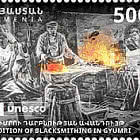

| Avatar - Fire and Ash |
| Issued: 03.12.2025 |
| ›New Zealand |
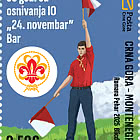
| 50th Anniversary of the Founding of the 24th November Bar Scout |
| Issued: 24.11.2025 |
| ›Montenegro |
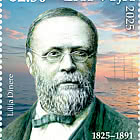
| Krisjanis Valdemars |
| Issued: 02.12.2025 |
| ›Latvia |
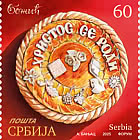

| Sign Language - Good |
| Issued: 02.12.2025 |
| ›Bosnia and Herzegovina - Republic of Srpska |

| In Memory of the Fallen and Murdered on October 7, 2023 |
| Issued: 08.10.2025 |
| ›Israel |


| Annual Collection Folder (New York) |
| Issued: 05.12.2025 |
| ›United Nations |

| Year Set |
| Issued: 24.11.2025 |
| ›Isle of Man |
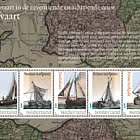
| Shipping in the 17th and 18th Centuries - Peat Shipping |
| Issued: 05.12.2025 |
| ›Netherlands |