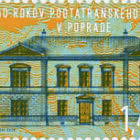
The Synagogue in Trenčín is one of the most architecturally significant synagogues in Slovakia. It has been a witness to the presence of the Jewish community and is at the centre of the city’s cultural life. After a successful renovation of the interior, it was re-consecrated on 9th November 2025, thus returning to its original purpose as a house of Jewish worship. At the same time, it also serves as a “Space for Dialogue and Understanding” and is open to visitors.
The origins of the Trenčín community date back to the 17th century. It is believed that the first synagogue was a wooden building which was destroyed by fire in 1790. It was replaced by a new structure constructed from masonry, however, by the early 20th century it was no longer able to meet the needs of the growing community.
In 1912, the Berlin based architect, Richard Scheibner, a native of Piešťany, designed a new synagogue in cooperation with Hugo Pál. The synagogue, finished in 1913, is a masterful combination of Art Nouveau and Oriental inspirations. Architecturally, it is dominated by a reinforced concrete dome and the modern approach to its construction, which made it possible to create a spacious interior. The original interior was richly decorated with murals, a chandelier, and stained-glass windows.
The history of the building reflects the tragedies of the past century. After the Holocaust and the restoration of the damaged building, it was re-consecrated in 1948 with memorial plaques to the victims. During the Communist regime, it was expropriated by the state and served as a fabric warehouse. In the 1970s and 80s, the building underwent restoration as a monument. The interior was whitewashed and religious symbols were removed from the façade. It was used as an exhibition hall. After 1989, the process of restitution, the restoration of buildings and the revival of the Jewish community began. The building is a part of the Slovak Jewish Heritage Route.
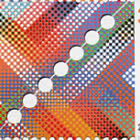
The motif of the first day cover (FDC) is a relief that depicts the Tree of Life and the Horns of Plenty from the façade of the Synagogue. The postmark shows the detail of a stained-glass window with a chalice for blessing wine.
Maroš Borský