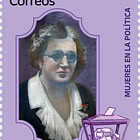
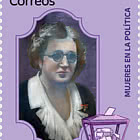
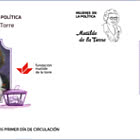
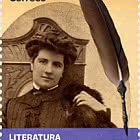
Born in Cabezón de la Sal (Cantabria) into a family that encouraged her intellectual and cultural interests, Matilde de la Torre (1884-1946) exemplifies the important social changes of the first half of the 20th century. A writer and journalist, she made her debut in the world of literature with the novel Jardín de las Damas Curiosas (Garden of Curious Ladies, 1917), a nod to her cousin, the great artist María Blanchard. Her subsequent publications, essays, and newspaper articles revealed her growing social and political commitment, her defense of women's rights, and her democratic spirit. Alongside her artistic side, her commitment to culture and education is also noteworthy, leading her to found, inspired by the Institución Libre de Enseñanza (Free Institution of Education) and supported by Consuelo Berges—another great woman and also a relative—the Academia Torre and the “Orfeón Voces Cántabras” choir, which has been considered a parallel project for non-formal education.
With the choir, she carried out important work compiling and recovering songs and dances, the echoes of which still resonate today in Cabezón de la Sal. A PSOE representative in the Spanish Parliament for Asturias (1933-1939), promoter of the Casas Campesinas de Cantabria (Peasant Houses of Cantabria) and Director of Tariff Policy for the Second Republic (1936-1937), after the fall of democracy, Matilde de la Torre went into exile, first in France and then Mexico, where she died on March 19, 1946, and where she has been laid to rest in the Spanish Pantheon, awaiting the transfer of her remains to her hometown this year, as was always her wish.
Matilde de la Torre Foundation