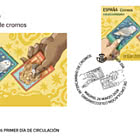
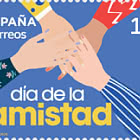
The stamp dedicated to trading cards issued by Correos commemorates the culture of collecting and the social value of exchange, a timeless tradition that fosters personal connection.
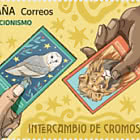
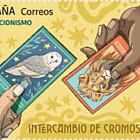
This philatelic issue captures an everyday, universal moment: two hands exchanging cards, one with an owl and the other with a lion. The hands, drawn with different skin tones, symbolize the universality of this hobby.
The act of collecting and exchanging trading cards transcends generations, serving as a meeting point that goes beyond the mere accumulation of objects. It represents the excitement of completing an album, negotiation, camaraderie, and often the first glimpses of social economics and market value for young people.
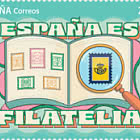
Philately itself is a form of collecting, so this stamp pays double tribute by connecting two related worlds: that of trading cards and that of stamps.
Trading cards is a century-old tradition that transformed advertising into a social phenomenon. It all began in the 19th century, when chocolate and meat extract companies included artistic chromolithographs as a commercial lure. However, the real revolution came in 1961 with the industrialization of soccer collecting, which introduced randomness into the packs, making trading a necessity to complete the albums.
In Spain, this practice forged its own language based on “sile” and “nole,” turning iconic squares such as the Mercat de Sant Antoni or the Rastro de Madrid into veritable schools of negotiation for children and adults alike. Today, nostalgia coexists with technology, proving that the instinct to collect and share is timeless.
In the end, trading cards are much more than paper and glue; they are childhood's first currency.