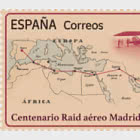
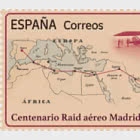
THE MADRID-MANILA RAID BY THE “ELCANO” SQUADRON (APRIL-MAY 1926) At the end of 1924, a group of Spanish military aviators presented a proposal to the command to carry out an air raid to the Philippines, seeking to increase national prestige by showcasing the country's aeronautical advancements. The project received the approval of the authorities, but the trip had to be postponed until 1926 due to delays by Breguet in the delivery of the aircraft to be used, the Breguet XIX biplanes. The squadron, named the “Elcano Squadron” in honor of the man who completed the first circumnavigation of the world (1519-1522) with a stop in the Philippines, consisted of three Breguet XIX aircraft, ready to begin their voyage from Cuatro Vientos (Madrid) on April 5, 1926. The crews of each aircraft were as follows:
- Crew of Breguet XIX aircraft No. 30 “López de Legazpi”: Infantry Captain (pilot) Eduardo González-Gallarza and Corporal Joaquín Arozamena (mechanic).
- Crew of Breguet XIX aircraft No. 29 “Fernando de Magallanes”: Artillery Captain (pilot) Joaquín Loriga Taboada and Sergeant Eugenio Pérez (mechanic).
- Crew of Breguet XIX aircraft No. 24 “Sebastián de Elcano”: Infantry Captain (pilot) Rafael Martínez Esteve and Corporal Pedro Mariano Calvo (mechanic). After several incidents and numerous setbacks, only Captains González-Gallarza and Loriga reached Manila, aboard the aircraft "Legazpi," with González-Gallarza as pilot in command, on May 13, 1926.
As a guide to the dates of the flights for the successive stages leading to Manila, we present below the details provided by the aviators Gallarza and Loriga themselves in the book they wrote about their aerial adventure.3 5 APRIL 1926 = STAGE 1 → Madrid – Algiers (Algeria) 6 APRIL 1926 = STAGE 2 → Algiers – Tripoli (Libya) 7 APRIL 1926 = STAGE 3 → Tripoli – Benghazi (Libya) 8 APRIL 1926 = STAGE 4 → Benghazi – Cairo (Egypt) 11 APRIL 1926 = STAGE 5 → Cairo – Baghdad (Iraq) 13 APRIL 1926 = STAGE 6 → Baghdad – Busheshire (Persia, now Iran) – Bender Abbas (Persia, now Iran) 14 APRIL 1926 = STAGE 7 → Bender Abbas – Karachi (British India, now Pakistan) 16 APRIL 1926 = STAGE 8 → Karachi – Agra (British India, now India) 18 APRIL 1926 = STAGE 9 → Agra – Calcutta (British India, now India) 21 APRIL 1926 = STAGE 10 → Calcutta – Rangoon (British India, now Burma or Myanmar) 22 APRIL 1926 = STAGE 11 → Rangoon – Bangkok (Thailand) 24 APRIL 1926 = STAGE 12 → Bangkok – Saigon, now Ho Chi Minh City (Indochina, now Vietnam) April 26, 1926 = STAGE 13 → Saigon – Hanoi (Indochina, now Vietnam) May 1, 1926 = STAGE 14 → Hanoi – Macau (Portuguese Territory, now China) May 11, 1926 = STAGE 15 → Macau – Aparri (Philippines) May 13, 1926 = STAGE 16 → Aparri – Manila (Philippines)
The complete journey was approximately 17,000 km, lasting 39 days and with a total flight time of over 106 hours. During the voyage, the pilots transported “…messages for the authorities of the countries en route…and a large number of letters, which some friends sent through us to the Philippines and other points along the way.”4 Several groups of letters have been identified that departed from Madrid with Spanish postage on April 4 or 5 and were addressed to Manila, or to intermediate destinations from where they were forwarded to Spain. Upon arrival in Manila, two commemorative stamps were applied using a manual stamp with black or blue ink, specially prepared for the occasion.
- MANILA ARRIVAL STAMP NO. 1: A biplane in a descending position with three coats of arms (those of Spain, the Philippines, and the United States), the inscription “RAID MADRID-MANILA” below the image of the airplane, and the date “MAY. 13, 1926” above the image of the airplane. The names “LEGAZPI” and “MAGALLANES” are also written on the wings.
- MANILA ARRIVAL MARK NO. 2: Biplane in a climbing position with the inscriptions “MADRID TO MANILA FLIGHT / ACCOMPLISHED BY / SPANISH AVIATORS” on the upper wing and “MANILA / PHILIPPINE ISLANDS” on the lower wing. The date “MAY. 13, 1926” is also present below the image of the aircraft.
These markings were the initiative of José Castañer, a Spaniard residing in Manila, who obtained a certificate from the Manila Post Office, signed by the Director of the Post Office in the Philippines, Mr. José Topacio, attesting to the preparation of these special markings for the occasion and the number of letters on which they were applied, both those originating in Madrid and those from other stages of the journey.
Below are two examples of letters originating in Madrid and transported on this flight.