Article 107 of the Spanish Constitution defines the Council of State as "the supreme advisory body of the Government" and refers to the organic law for the regulation of its composition and powers. Subsequently, the organic law legislator declared that the Council of State had played "a decisive role in guaranteeing the quality, technical expertise, and rigor of the Executive's actions, carrying out a crucial task in defending the rule of law" (Explanatory Memorandum of Organic Law 3/2004, of December 28, amending Organic Law 3/1980, of April 22, on the Council of State).
The Council of State has played a fundamental role in the history of Spain. Since King Charles I decisively transformed it in Granada in July 1526, it has advised the State on matters of special legal and political significance. In our contemporary history, the Council of State was established as an institution of constitutional Spain by decision of the Cortes of Cádiz. Thus began a constitutional tradition that would find its reflection in the 1931 Constitution, culminating in the current 1978 Constitution.
In recognition of the historical trajectory of the Council of State and its current constitutional relevance, Royal Decree 98/2025, of February 18, was enacted, creating the National Commission for the Commemoration of the Fifth Centenary of the Council of State. This Commission was tasked with designing, planning, and coordinating the series of commemorative events and activities to be held throughout 2026.
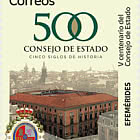
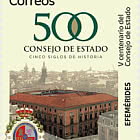
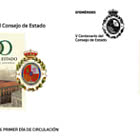
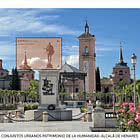
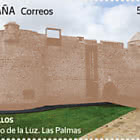
In this historical and institutional context, Correos (the Spanish postal service) is issuing a stamp that, in addition to referencing the centenary being celebrated, prominently features the Palace of the Councils. This palace acquired its name because it was leased by Philip V for the Councils of the monarchy, and today it houses the Council of State.
Council of State