Risk of flooding
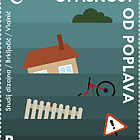
Floods are one of the most common natural disasters that have accompanied humanity throughout history. However, due to pronounced climate change in recent decades, floods have become increasingly frequent and destructive. Climate change not only contributes to stronger precipitation due to increasingly warm oceans and, consequently, greater evaporation and moisture in the atmosphere, but also alters precipitation distribution patterns. Changes in precipitation distribution cause prolonged periods of drought followed by intense rainfall, which can overwhelm drainage systems and rivers, leading to flooding. Heavy or record rainfall events are becoming more frequent, and in recent years catastrophic floods have devastated many areas in Europe. Scientists warn that the risk of extreme floods will continue to grow if the world fails to limit global warming.
In recent decades, the frequency of floods along the Adriatic coast has also increased, and this trend is expected to continue over the next 50 to 100 years, causing damage to populations, the environment and infrastructure. Due to climate change, it is assumed that by 2100 the sea level in the Republic of Croatia could rise between 32 and 65 cm. Without climate change mitigation and adaptation, the direct damage from floods could increase sixfold by the year 2100. Mitigation can significantly reduce the impacts of global warming by applying appropriate adaptation strategies. Reducing flood peaks through the use of retention areas and by restoring natural wetlands and river floodplains to retain excess water can significantly reduce the negative impacts of water in a cost-effective way in most EU countries.
Retention areas have additional benefits, such as restoring the natural functioning of floodplains, replenishing groundwater, improving ecosystem quality and maintaining biodiversity. The restoration and rehabilitation of rivers and their floodplains include a wide range of measures that focus on the natural functions of rivers, many of which have been largely lost or degraded due to centuries of human activity (for example: dam construction, building embankments, dredging sediments and river channelization).
The Republic of Croatia is one of the few European countries that still has large natural floodplains and wetlands along major rivers, such as the Lonjsko Polje and Kopački Rit nature parks. Lonjsko Polje nature park is a natural fluvial floodplain along the Sava river. It functions as a natural retention area that protects many settlements and cities from floods by receiving excess water from the Sava river, making it a global example of sustainable floodplain management. Periodic floods maintain wetland habitats that are extremely important from a biological and ecological perspective because they support rich biodiversity.
A similar situation exists in Kopački Rit nature park, which is among the few remaining large floodplain areas along the Danube river. Therefore, it is extremely important to protect these natural treasures in order to preserve biodiversity and, at the same time, to provide a natural way of defending against the harmful effects of water, that is, floods. The EU Biodiversity Strategy for 2030, presented by the European Commission in May 2020, is one of the key pillars of the European Green Deal. The protection and restoration of biodiversity and functional ecosystems are essential for ensuring the health of planet Earth and the long-term survival and well-being of humanity.
prof. dr. sc. Zlatko Mihaljević
University of Zagreb
Faculty of Science
Department of Biology