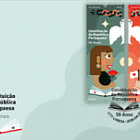
The Constitution of the Portuguese Republic, approved by the Constituent Assembly on 2 April 1976, and in force since April 25 of that same year, occupies a central position in Portugal's contemporary history. Following the Revolution of 25 April 1974, it marked one of the country's historic moments, in which Portuguese democracy found its institutional and legal expression.
This was a key moment in the transition to democracy. After nearly half a century of dictatorship, it was time to set new rules for how political power would be organised, to protect basic rights and freedoms, and to establish mechanisms of democratic representation. The election of the Constituent Assembly, held on 25 April 1975, by universal, direct, and secret suffrage, was a historic milestone, affirming popular sovereignty as the basis of the new regime and opening an unprecedented chapter in political life.
The constituent process took place in a particularly intense context. Portuguese society was living under the impact of the revolutionary mobilisation, marked by debates on the country's political direction, the active presence of the Armed Forces, and profound social transformations. In this context, the 1976 Constitution was the result of debate and compromise between different projects, reflecting the tensions and aspirations of that historic moment.
The approved text established the fundamental principles of Portuguese democracy. It consolidated popular sovereignty, political pluralism and the separation of powers, established a representative system based on universal suffrage and defined a broad catalogue of rights, freedoms and guarantees. These were complemented by a significant set of economic, social and cultural rights, expressing the ambition to build a democracy that would unite political freedom and social justice.
Over the course of five decades, the Constitution has shown a remarkable adaptability. Its successive revisions have accompanied democratic consolidation, the transformation of Portuguese society and European integration. Some institutional arrangements and formulations in the original text have evolved, but the underlying principles have remained intact, which explains the longevity of the 1976 Constitution. More than a fundamental law, it has become a reference for Portuguese democratic life. It has regulated the organisation of political power, guaranteed fundamental rights, provided a framework for governmental alternation and contributed to consolidating a political culture based on pluralism and respect for democratic rules.
Honouring the Constitution's 50th anniversary therefore means recognising its value as the institutional foundation of democracy and as a collective heritage: the memory of a historic achievement — freedom regained after decades of dictatorship — but also a living instrument of democracy, which continues to guide the organisation of political power and protect citizens' rights.
At a time when democracies face new challenges — from political polarisation to social and technological transformations — the Constitution retains its essential role: establishing limits on power, guaranteeing rights, and affirming the fundamental values that structure collective life, inspiring the present and guiding the country's democratic future.