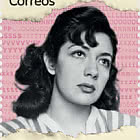
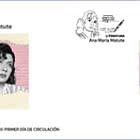
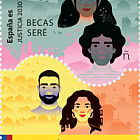
Ana María Matute was born in the summer of 1935 in Barcelona. With a Catalan father and a Castilian mother, she spent her childhood between Madrid and Barcelona, growing up as a child of both cities and of neither at the same time. This early uprooting made her a solitary child who, like so many others, found refuge in books: her true school, the place where the writer she would later become began to take shape. At just seventeen, she wrote her first play, *Pequeño teatro* (Little Theater), although it wasn't published until eleven years later.
She was a rebellious child. The Civil War confronted her abruptly with a reality that shattered the safe haven of childhood and left her with a profound conviction: the essential injustice of life. A feeling that would forge her character and never leave her: it permeated all her work and made her a writer committed to the weak, to the vulnerable.
With her novel *Primera memoria* (First Memory), Matute came to the attention of a wider audience and was established as a writer when she won the Nadal Prize in 1959. This work already laid the groundwork for her literary development and the major themes that would always accompany her: solitude, miscommunication, escape, and evasion.
She belonged to the Generation of '50, which she herself called the "astonished young people," that group of writers marked by the post-war period who viewed the world with a mixture of bewilderment and lucidity, a group that also included names like Juan Marsé, Carmen Martín-Gaite, and Rafael Sánchez Ferlosio.
*Los Abel*, *Los niños tontos* (The Foolish Children), *Olvidado rey Gudú* (Forgotten King Gudú)... are just some of the titles that make up one of the most unique bodies of work in contemporary Spanish literature. Thanks to her and her prodigious narrative genius, Ana María Matute was elected to the Royal Spanish Academy in 1996 and received numerous accolades, such as the National Prize for Spanish Literature (2007) and the Cervantes Prize (2010). In her later years, without ever losing her lucid gaze or the irony in her smile, she conveyed in her interviews a blend of intelligence and humor that made her especially approachable. She tended to downplay her own importance, as if she weren't one of the most significant authors in Spanish literature and a role model for so many writers of her generation and those that followed.
She continued writing until her death on June 25, 2014, because she never understood writing as a choice, but as a condition. For her, it was a way of being in the world.