Croatian Military Tradition
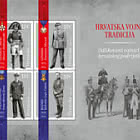
| Miniature Sheet |
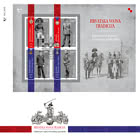
| First Day Cover |
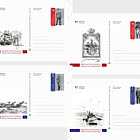
| Postcard |
Decorated soldiers of Croatian origin
For centuries, Croatian soldiers, renowned as fearless warriors, defended not only their own homeland but also fought under the banners of foreign rulers who were at the same time Croatian rulers. Alongside them stand numerous individuals of Croatian origin, regardless of whether they were born in Croatia or whether their parents were Croats, who served under the flags of the countries to which they emigrated or in which they were born. The names of some of them serve as a reminder of the honor and glory of the armies in which they served. For their deeds and merits, they were awarded the highest decorations their respective countries could bestow. Among them are General Marko Slivarić Heldenburški, Major Vjekoslav Lujo Cukela, Chief Petty Officer Petar Herceg Tonić and General Stanisław Maczek.
Marko Slivarić Heldenburški (Marc Slivarich de Heldenbourg, 1762–1838)
Marko Slivarić Heldenburški was born in 1762 in the village of Vrčin Dol near Pleternica in Slavonia. His father Martin was a frontier officer who, for his merits on the battlefield, was granted a noble title with the predicate Heldenburški (von Heldenburg) by Queen Maria Theresa, a title inherited by his son Marko.
Marko also chose a military career and became an artillery officer. From 1782, he served in the Croatian Military Frontier as an officer and commander in Croatian frontier regiments. Over time, he was promoted through the ranks and in 1809 attained the rank of major. That spring, the wars waged by the Habsburg Monarchy against Napoleonic France spread to Croatian lands, and Slivarić took part in battles in Lika against French forces commanded by Marshal Marmont. In the same year, the Monarchy was forced to cede all Croatian lands south of the Sava River to France, which incorporated them into the Illyrian Provinces. Croatian frontier regiments in that part of the Frontier became part of the French forces, and from 1810, Slivarić continued his service as a colonel and commander of the Lika Regiment. That same year, he was part of a delegation of the Illyrian Provinces in Paris and was awarded the Officer’s Cross of the Legion of Honor. Upon returning to Croatia, he continued serving as colonel of the First Croatian Provisional Regiment, which soon became part of the IV Corps of the Grande Armée and, from the summer of 1812, fought in Russia as part of Napoleon’s campaign. Under Slivarić’s command, the regiment fought successfully in a series of major battles, including the well-known Battle of the Berezina River on 29 November 1812. The collapse of the French campaign in Russia reduced the regiment to mere remnants. Slivarić was among the survivors and was promoted by Napoleon to the rank of brigadier general at the beginning of 1813. After Napoleon’s abdication in 1814, Slivarić fell into Habsburg captivity, from which he requested a return to the Habsburg army and to Croatia. His request was denied, and after his release, he went to France and continued serving in the French army. He also served during the famous Hundred Days, when, following the French defeat at Waterloo, he successfully resisted Habsburg forces as commander of the city of Antibes on the French Riviera. This success simultaneously prevented his return to his homeland and service in the Habsburg forces. He remained in France, where he died in 1838.
Vjekoslav Lujo Cukela (Louis Cukela, 1888–1956)
Born in Split in May 1888, Cukela spent his childhood and early youth in his hometown, where he was educated. After completing school, he entered military service in 1907, remaining until 1911.
Soon afterward, like many Croats of the time, he crossed the ocean to the New World – the United States of America. In his new homeland, Lujo chose the U.S. Army as his profession, enlisting in September 1914. At that time, battles of the First World War were already raging in Europe, but the United States remained neutral. Anticipating U.S. entry into the war, Cukela left the Army in June 1916. Believing that Marines might be sent first to European battlefields once the U.S. entered the war, he joined the U.S. Marine Corps in January 1917. Shortly thereafter, in April 1917, the United States entered the war on the side of the Entente, and Cukela, as a member of the 5th Marine Regiment, soon experienced combat on the battlefields of France. As an experienced soldier, on 18 July 1918, near Villers-Cotterêts, he single-handedly went behind enemy lines and destroyed a machine-gun nest, enabling the continued advance of his unit, which had been halted by heavy machine-gun fire. For this feat, he received two Medals of Honor, both the Army and Navy versions. He remained on the battlefields of France until the end of the war, and his exploits are further attested by the French award of the Legion of Honor with the rank of Knight. Cukela served during the war as a non-commissioned officer, and after its conclusion, he remained in the Marine Corps, participating in several military campaigns during the 1920s and serving in various parts of the world – from Haiti to China. In 1919, he was commissioned as a first lieutenant, and from 1921 until his retirement in June 1940, he held the rank of major. Shortly after retiring, he was recalled to active duty in July 1940. Nevertheless, during the war the United States entered in December 1941, he did not serve on the front lines but was retained stateside and finally retired in May 1946. He died in 1956 and was buried with full military honors at Arlington National Cemetery.
Petar Herceg Tonić (Peter Tomich, 1893–1941)
Petar Herceg Tonić was born in 1893 in Prolog near Ljubuški. In 1913, like many Croats, he emigrated to the United States of America. In 1917, he joined the U.S. Army, in which he served during the First World War. After the war, he left the Army and in 1919 transferred to the United States Navy. At the beginning of December 1941, he was stationed at Pearl Harbor in Hawaii as a Chief Petty Officer aboard the USS Utah. His heroism and tragedy began on 7 December 1941, when hundreds of Japanese aircraft attacked the ships and infrastructure of the U.S. Pacific Fleet at Pearl Harbor. Caught by surprise and unprepared for the attack, American ships sank one after another amid flames. Among the hit vessels was Tomich’s USS Utah, which soon began to list and sink after being struck. Crew members, including Peter Tomich, made their way toward the deck to save themselves. Realizing that the ship’s boiler room had been damaged and threatened to explode – potentially killing those still aboard – Tomich returned to the boiler room and continued to monitor the boilers. He managed to prevent their explosion, but when he later attempted to escape the ship himself, he drowned as seawater rapidly flooded in. For his heroism aboard the USS Utah, he was posthumously awarded the Navy Medal of Honor in 1942. After a long search for his relatives, Tomich’s Medal of Honor was finally presented in 2006 aboard the USS Enterprise, anchored off Split, to his descendant and Croatian Army colonel Srećko Herceg Tonić.
Stanisław Maczek (1892–1994)
Stanisław Maczek was born in March 1892 near the city of Lwów (Lemberg), present-day Lviv in western Ukraine. He was of Croatian (or Croatian-Slovenian) origin and was related by family ties to Vladimir Maček, later president of the Croatian Peasant Party.
At the outbreak of the First World War, as a Polish patriot, he wished to join Józef Piłsudski’s Polish Legions. However, he was conscripted into the Imperial and Royal Army and, after brief officer training, was sent to the Italian front. After the war, Maczek returned to the reestablished Polish state. Initially, he fought against West Ukrainian forces and later participated in the Polish-Soviet War, in which Poland fought to preserve its newly restored statehood.
After the war, he remained in active military service and was promoted to the rank of colonel in early 1931. In October 1938, he became commander of the 10th Motorized Cavalry Brigade, which, after the German invasion of Poland in September 1939, was the only fully motorized and armored brigade of the Polish Army. Despite inferiority in equipment and armament, this enabled him to significantly slow the German advance on the southern part of the front. During the September Campaign of 1939, his brigade suffered heavy losses but was never defeated. Ultimately, he withdrew with the entire brigade toward Hungary, where he was interned but not handed over to German or Soviet aggressors. He later managed to reach France, where he continued the fight against Germany with Polish forces. During the German advance into France in the spring of 1940, his forces successfully resisted German breakthroughs. Following the collapse of France, he escaped with a significant number of his men and eventually reached Great Britain. There, in February 1942, he formed the 1st Polish Armoured Division, which entered combat in Normandy in early August 1944. Until the end of the war, the division fought a series of successful battles across northern France, Belgium, the Netherlands and into Germany. Due to the effectiveness with which he destroyed enemy forces, the Germans referred to his troops as the “Black Devils.” By the end of the war, Maczek had been promoted to the rank of major general. The end of the war and the defeat of Nazi Germany did not bring him a triumphant return to his homeland, which was reestablished as a “people’s” republic under Soviet domination. As an opponent of the communist dictatorship, he neither wished nor was able to return home and remained in Great Britain as an emigrant.
Ultimately, the collapse of the communist system in Poland in the late 1980s brought Maczek recognition from his homeland, and in 1994, he was awarded Poland’s highest decoration, the Order of the White Eagle. He died in December of the same year at the age of 102.
dr. sc. Mario Jareb, Scientific Advisor
Croatian Institute of History
Croatia - Recommended stamp issues






WOPA+ recommended stamp issues

| Avatar - Fire and Ash |
| Issued: 03.12.2025 |
| ›New Zealand |
| 50th Anniversary of the Founding of the 24th November Bar Scout |
| Issued: 24.11.2025 |
| ›Montenegro |
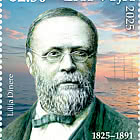
| Krisjanis Valdemars |
| Issued: 02.12.2025 |
| ›Latvia |
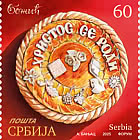

| Sign Language - Good |
| Issued: 02.12.2025 |
| ›Bosnia and Herzegovina - Republic of Srpska |

| In Memory of the Fallen and Murdered on October 7, 2023 |
| Issued: 08.10.2025 |
| ›Israel |


| Annual Collection Folder (New York) |
| Issued: 05.12.2025 |
| ›United Nations |

| Year Set |
| Issued: 24.11.2025 |
| ›Isle of Man |
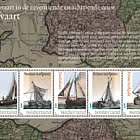
| Shipping in the 17th and 18th Centuries - Peat Shipping |
| Issued: 05.12.2025 |
| ›Netherlands |