The evolution of the Basic Series is the story of how Spain has projected its identity to the world through the postal service.
Since the first Spanish stamp bearing the image of Isabella II was issued in 1850, this series has been the cornerstone of our philately, continuously adapting to the country's political, aesthetic, and technological changes.
Historically, the Basic Series has served a dual purpose: guaranteeing universal postal service and acting as the official image of the State. We have gone from the classic lithographs of the 19th century, where security against counterfeiting was the main challenge, to the intaglio engravings that defined the elegance of the issues of Alfonso XIII and Juan Carlos I. Each change of reign or system of government has left an indelible graphic mark on these small pieces of perforated paper.
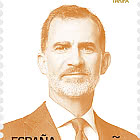
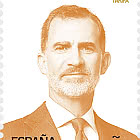
The current issue of Felipe VI represents the culmination of this metamorphosis. While the earliest stamps in history focused on Baroque ornamentation and complex borders, contemporary design embraces minimalism. The white background and clean typography allow the monarch's portrait to be the absolute protagonist, eliminating distractions and focusing the message on the modernity and transparency of the institution.
Even the format of the denominations has evolved: from the old reales and centimos of the peseta, we have moved to the current tariff letters (A, B, C), which simplify public use and ensure the stamp's validity despite economic fluctuations. This piece is not just a postage stamp; it is also the latest link in a chain that unites 19th-century tradition with 21st-century efficiency, while keeping alive the essence of a Spain that communicates and recognizes itself in its symbols.
This issue is innovative because the Ñ, which has been included on all Spanish stamps since 2015, will be die-cut rather than embossed.