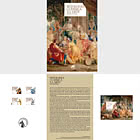
If there is one defining feature of the so-called Western world, it lies in the way we have, for over a thousand years, held Greco Roman culture up as a model to be replicated, followed and rediscovered. The idea of the Renaissance arose from this desire almost a necessity to return to models regarded as correct and perfect. Much of our art and literature has been built upon this search for a lost reality, regarded as indispensable.
The book On the Shoulders of Giants: Classical Mythology in Art in Portugal is a valuable resource that shows us citizens of an age in which the whirlwind of the present seems to distract us from what truly matters how this aesthetic tradition pursues us and, above all, shapes us and gives us meaning. Identifying elements of classical mythology in art, and more broadly in culture, is a relatively effortless exercise, such is its omnipresence. However, this presence is more than the result of a mere matter of taste or trend: classical mythology, recreated and reinterpreted over the centuries, is so deeply ingrained in the concepts and words we use that nothing we think can be understood without this constant link between us and the lost world of ancient Greece and Rome.
Western culture has borrowed the grammar of ancient mythology to define concepts, morals and ethics. To outline the limits of what it means to be human and to teach us how to live in society above all, how to live with ourselves, amidst our inner struggles and conflicts. It is through these episodes that we examine ourselves in the mirror and reflect about who we are, seeking role models, passions and meaning.
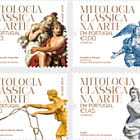
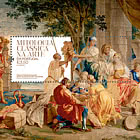
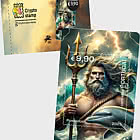
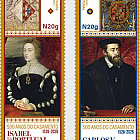
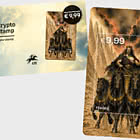
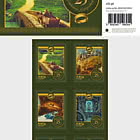
Through this work, published both in a book and in this stamp issue, we tried not to identify the best known or most frequently depicted scenes in Western art. Instead, we chose to present a diverse selection that shows how the echoes of Classical Antiquity shape our perspective on the world and provide us with the semantic tools to better understand it.
The classical mythological canon is undoubtedly the primary determining factor of who we are, of how we think and how we relate to the world. As we explore a collection of works of art that, after centuries and millennia, revive a culture that belongs to others, we realise that it is ultimately ours, even if it has been recreated.
We hope that, throughout this work, the reader will come to appreciate how much our culture comes from a distant past and recognise how our identity is shaped and nourished by a powerful set of myths and narratives that give us a sense of purpose and constantly challenge us.
Paulo Mendes Pinto
Coordinator of the Area of Science of Religions at Lusofona University
Author of the book On the Shoulders of Giants: Classical Mythology in Art in Portugal