Romania, 70 Years In Unesco
| Set |
| Sheetlets |
| First Day Cover |
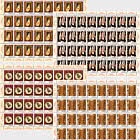
| Full sheets |
Romfilatelia and the Romanian Post introduce into circulation, on Thursday, July 2nd this year, the postage stamp issue entitled ROMANIA, 70 YEARS IN UNESCO.
The United Nations Educational, Scientific and Cultural Organization (UNESCO) was founded in 1945. Romania has been a member of UNESCO since July 27th, 1956.
The organization’s purpose is to maintain international peace and security by contributing, through education, science, culture, and communication, to cooperation among nations to ensure universal respect for justice, the rule of law, human rights, and fundamental freedoms for all, regardless of race, sex, language, or religion, in accordance with the Charter of the United Nations.
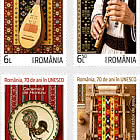
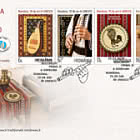
The issue, comprising four postage stamps and a First Day Cover, proudly promotes four of the customs and traditions of Romanian culture that have been inscribed on UNESCO’s Representative List of Intangible Cultural Heritage of Humanity: the doina (October 2009), Horezu ceramics (December 2012), the traditional wall carpet (scoarță) (December 2016), and, most recently, the cobza (a traditional Romanian lute-like string instrument), inscribed in December 2025.
The Doina (with the face value of Lei 6.50) is one of the representative literary forms, uniquely Romanian, that enriches folklore alongside fairy tales, ballads, and so on. As a literary genre, the doinais a lyrical work in verse that expresses a wide range of profound emotions (such as longing, sorrow, and love) and is traditionally performed to a melodic accompaniment.
The craftsmanship of Horezu ceramics (with the face value of Lei 11) is a unique traditional craft practised by both men and women in the northern part of Vâlcea County, where the production process is divided according to long-established roles. Men are responsible for extracting the clay, which is then cleaned, portioned, moistened, kneaded, pounded, and mixed, thus becoming the sticky raw material from which the famous reddish Horezu pottery are made. Women decorate the finished pieces using traditional techniques and specialised tools to create distinctive decorative motifs. The skill and artistry involved in combining shapes and colours define the individuality and uniqueness of this type of pottery. The colours are vivid and range from dark brown, red, green, and blue to the famous Horezu ivory, and the symbols depicted include the fish, the snake, the rooster, the tree of life, and the oak leaf.
A landmark of Romanian folk, the traditional wall carpet (scoarță) (with the face value of Lei 16) is part of the broad family of utilitarian and decorative woollen textiles, created both to protect and to enhance the living space.
In Romania, the weaving of scoarță has an ancestral tradition. The name is of Latin origin and recalls the wall carpet’s original function, which is similar to that of spruce bark, which was used in the past to insulate log-walled houses.
The originality, coherence and artistic value of Romanian scoarță are the result of the technical skill of the women who crafted them, generation after generation, and to the ingenuity with which they incorporated motifs and symbols widely used throughout Europe and beyond into their decorative compositions.
Scoarță are woven on either horizontal or vertical looms by interlacing woollen threads. The preparatory stages of the weaving process - including the sorting and manual processing of the textile fibres, followed by warping and threading the loom - are the steps that lay the foundation for the finished textile.
The inscription of the cobza on UNESCO’s Representative List of the Intangible Cultural Heritage of Humanity highlights both its artistic and cultural significance (with the face value of Lei 6) and its important social role. Crafted by local artisans and used as a primary musical instrument, alongside the violin, in both rural and urban communities by performers of different generations, the cobza contributes to community cohesion, the intergenerational transmission of the traditional musical repertoire, and the strengthening of cultural identity. The fact that an increasing number of women and girls are playing this instrument also marks a significant development in terms of gender equality and diversity in the arts.
Romfilatelia thanks its institutional partners - the Romanian National Commission for UNESCO, the ‘Dimitrie Gusti’ National Village Museum, and the National Museum of the Romanian Peasant - for the documentary support they provided in the development of this postage stamp issue.
Romania - Recommended stamp issues





WOPA+ recommended stamp issues

| Avatar - Fire and Ash |
| Issued: 03.12.2025 |
| ›New Zealand |
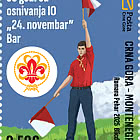
| 50th Anniversary of the Founding of the 24th November Bar Scout |
| Issued: 24.11.2025 |
| ›Montenegro |

| Krisjanis Valdemars |
| Issued: 02.12.2025 |
| ›Latvia |
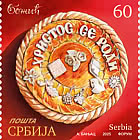

| Sign Language - Good |
| Issued: 02.12.2025 |
| ›Bosnia and Herzegovina - Republic of Srpska |

| In Memory of the Fallen and Murdered on October 7, 2023 |
| Issued: 08.10.2025 |
| ›Israel |


| Annual Collection Folder (New York) |
| Issued: 05.12.2025 |
| ›United Nations |
| Year Set |
| Issued: 24.11.2025 |
| ›Isle of Man |
| Shipping in the 17th and 18th Centuries - Peat Shipping |
| Issued: 05.12.2025 |
| ›Netherlands |