The Mosaic of the Ocean God
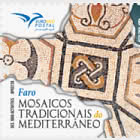
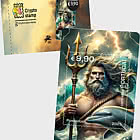
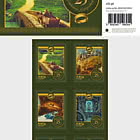
The mosaic of the Ocean God, identified in the city of Faro between Infante D. Henrique Street and Ventura Coelho Street in 1926, was only uncovered in 1976; it is one of the most outstanding examples of the Roman presence in the south of the Iberian Peninsula. Dating from the 2nd/ 3rd centuries AD, it displays a central medallion depicting the god Oceanus, traditionally portrayed with wavy hair, a beard and marine imagery. This medallion was originally framed by the personifications of the four winds; however, only Boreas and Zephyrus remain today, the other figures were destroyed in 1926.
The remaining floor is decorated with geometric and plant designs, resulting in a harmonious combination that highlights the technical and aesthetic quality of the work. In the lower section, there is a panel with an inscription listing the names of the four people responsible for the donation of this mosaic. The iconography of the Ocean God reflects the deep connection between Roman societies and the sea, an essential element for communication, the economy and the movement of goods, people and ideas throughout the Mediterranean region.
Set against the backdrop of the ancient city of Ossonoba (currently Faro), this mosaic bears witness to the city’s integration into Mediterranean life. As a major commercial harbour and logistics hub supporting maritime trade, Ossonoba played a strategic role in maritime routes, serving as a stopover for ships crossing the Strait of Gibraltar en route to Olisipo (currently Lisbon). Designated a National Treasure since May 2018, this mosaic stands out for its artistic quality and historical significance, helping to explain the Roman Algarve as a place where cultures converged within the Mediterranean world.
Carla Guerreiro e Jorge Manhita
Faro City Museum
Mosaics of Mértola
The mosaics of Mértola were part of an early Christian religious complex comprising two monumental baptisteries, a cloister and a basilica, all dating from the 5th–6th centuries AD.
These archaeological treasures came to light thanks to the painstaking archaeological work carried out over almost fifty years by Cláudio Torres and the team of researchers at the Mértola Archaeological Site, in this small village in the southern Alentejo.
At a time when Christianity was becoming firmly established, the settlement is thought to have had a population of diverse origins with links to the Eastern Mediterranean, a fact attested by the collection of tombstones written in Latin and Greek, found in the funerary basilicas and the mausoleum.
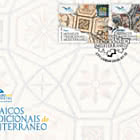
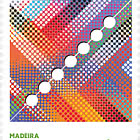
In this port city, the final reach of the Guadiana River navigable by boat, there once existed a prosperous community with both the economic means and the aesthetic sensibility to commission major building projects. Particularly noteworthy among these are the rich and refined mosaic pavements, which display great technical and artistic quality. The decorative motifs feature scenes of a horseman hunting with a falcon, a mythological scene of Bellerophon riding Pegasus as he battles the Chimera, and depictions of various animals, such as lions facing each other, a leopard and an ostrich, birds, and various geometric patterns. In the mosaic shown here, one can see a rich and complex geometric composition, framed by medallions depicting birds.
At this site, where its wealth and monumental architecture bear witness to its links with the cities of the Mediterranean basin, the mosaics make an undeniable contribution to our understanding of the religious complex and of Mértola in Late Antiquity.
Virgílio Lopes
Mértola Archaeological Site
Centre for Studies in Archaeology, Arts and Heritage Sciences