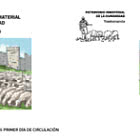
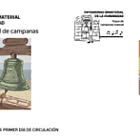
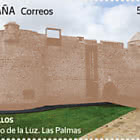
Correos continues its Intangible Cultural Heritage of Humanity series by issuing two new stamps in 2026 dedicated to transhumance and the ringing of church bells.
Transhumance, the seasonal movement of flocks, was recognized by UNESCO in 2019 and its designation expanded in 2023. It is practiced in the following countries: Albania, Andorra, Austria, Croatia, France, Greece, Italy, Luxembourg, Spain, and Romania.
Transhumance is a form of pastoralism consisting of the seasonal and long-distance movement of livestock between different geographical or climatic zones along established migratory routes. Every spring and autumn, thousands of animals move in flocks watched over by their shepherds, sometimes on horseback and even accompanied by their families and dogs, always following the same routes, such as the cañadas in Spain or the tratturi in Italy. Shepherds possess extensive knowledge of land and resource management, animal husbandry, and crafts related to food and object production, making transhumance one of the most sustainable and efficient livestock farming methods. It establishes a relationship between humans, animals, and ecosystems based on ecological balance and a socioeconomic model that has developed over centuries. The transmission of knowledge and techniques from elders to younger generations occurs during daily tasks, as well as in celebrations surrounding the transhumance cycle. These celebrations shape a cultural universe expressed through, for example, large communal meals, festivals like the Austrian Schaferfest, and religious rituals such as the feasts of Saint George and Saint Demetrius in Greece, which mark the beginning and end of the journey. All of this constitutes the living expression of the collective memory and identity of transhumant communities.
The manual ringing of bells was recognized by UNESCO in 2022 and expanded in 2024 to include the following regions of Spain: Spain (Valencia, Extremadura, Castile and León, Navarre, Basque Country, Castile-La Mancha, Andalusia, Aragon, Galicia, Extremadura, Canary Islands, Balearic Islands, Madrid, La Rioja, Catalonia, Cantabria, Asturias) and Italy.
Throughout the centuries, bell ringing has served as a means of expression and communication in Spain, fulfilling a range of social functions, from the exchange of information to coordination, protection, and cohesion. The coded messages transmitted through the different peals are recognized by various communities and contribute to structuring local life. A wide variety of sounds exists, determined by the techniques used (ringing, full pealing, or half pealing) combined with the skills of the bell ringers and the physical characteristics and acoustic properties of the bells, towers, and belfries. These elements converge to create a deep and rich repertoire in both the religious and civic spheres, marking different times of day, alerting the population to natural events such as fires or floods, or funeral processions, and announcing decrees and other news.
Bell ringing is also a central part of local events, celebrations, and performances. The practice is passed down from bell ringers to younger generations through groups or organizations of bell ringers who, in addition to documenting and researching the practice, also ring, transmit, instruct, and disseminate the art of traditional bell ringing. Most of those who pass on this knowledge are themselves young people trying to recruit new enthusiasts to continue the practice.