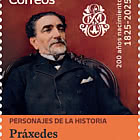
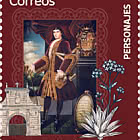
Práxedes Mateo-Sagasta was born in Torrecilla en Cameros (La Rioja) on July 21, 1825. His father, Clemente, a resident of Logroño, a merchant, entrepreneur, and active liberal militiaman, was suffering persecution at the hands of the absolutist authorities. His mother, Esperanza, also from Torrecilla, had distinguished herself by signing a Manifesto in which some thirty women asked King Ferdinand VII to sincerely support the “constitutional path.” These family circumstances shaped him from then on and led him toward the combative defense of revolutionary liberalism and the new avenues of modernization: individual freedoms and rights, political participation, the expansion of public works, and overcoming the obstacles that hindered material growth and progress.
His first professional activity was civil engineering. He arrived at his destination:
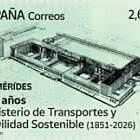
the district of Valladolid, province of Zamora, in the winter of 1849, where not a single league of road had been completed. There he dedicated himself to fieldwork, planning the routes not only of the road between Zamora and Galicia but also of one of the first railway lines in Spain, the Northern Line (Madrid-Irún-France), specifically the Valladolid-Burgos section.
However, he soon realized that other maps and itineraries deserved his energy: those of political activity. His prominence and dedication are overwhelming: four decades of parliamentary activity (1854-1902), holding various ministerial portfolios, and serving as Prime Minister seven times under different periods and political systems (the democratic monarchy of Amadeo I, the Republic of 1874, the constitutional monarchy of the Restoration, including the beginning of the reign of Alfonso XIII, well into the 20th century). Some guiding principles remained constant throughout his political actions, despite the vicissitudes: the defense of a Monarchy surrounded by democratic institutions and substance, the progressive expansion of suffrage, the suitability of alternating government between two political forces (progressives and conservatives), and the extension, as far as possible, of individual rights and freedoms.
Benito Pérez Galdós knew him very well and, with brilliant strokes, characterized him as “the politician who harmonized the shrill notes of Riego’s Hymn with the solemn chant of the Royal March.”