Croatia - Spain Joint Issue
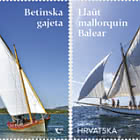
| Set |
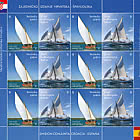
| Sheetlets |
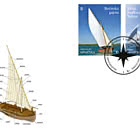
| First Day Cover |
Betina gajeta
The Betina gajeta is a traditional wooden boat that has been an indispensable part of the life of the inhabitants of Betina and the island of Murter for centuries. Built as a multipurpose vessel, it was used to transport people, livestock, building materials, wood, farming tools, crops and other products between the neighboring islands, the Kornati archipelago and the mainland. Thanks to its wide and stable hull, it was able to safely transport large cargo. Today, it is recognized as one of the most valuable examples of Croatian traditional maritime heritage. Organized shipbuilding in Betina has been developing since the mid-18th century. Local shipbuilders have perfected the shape of the gajeta to suit the shallow sea, numerous coves and the needs of island life. Years of maritime tradition combined with shipbuilding knowledge had allowed for the development of a vessel that was durable, reliable and adapted to everyday work at sea.
The boats were built without plans, based on the experience passed down from generation to generation. The shape of the boat was determined by the builder, using the šest, a special wooden template of the main rib in natural scale, based on which all the other ribs were derived using a measuring batten, while the rest of the hull line depended solely on the skill and "eye" of the builder himself. Different types of quality local wood were used for construction, selected according to the purpose of individual parts of the boat. The Betina gajeta is between 5 and 8 meters long, open inside in order to maximize the use of cargo space, while the bow and stern are closed for better protection when sailing. Traditionally, it was equipped with a lateen sail and oars. When there was no wind, the crew propelled the ship by rowing, often for several hours of travel. Sail management required extensive experience and good knowledge of wind and sea. With respect to its development stages, there is the older, more robust type of gajeta intended for the transport of heavy cargo and the newer, more elegant type suited for faster and easier sailing thanks to simplified maneuvering and adaptation to more modern navigation conditions.
All boats of the Betina gajeta type have recently been built according to a specific procedure and rules characteristic of the Betina wooden shipbuilding. The construction process traditionally takes place through eleven strictly defined phases, from the client's requirements and careful selection of timber to final outfitting. The Betina gajeta has several specific features, and a typical one is soha, a thole with a characteristic "U"-shape. Each soha is movable and has its own slot or box. On the gajeta, there were four to five alternately distributed. Two wooden cleats, notched on the outside, are located on each side of the stern to tension and wrap the sail sheet. A typical element is also the skala on the bow of the ship, a special wooden step designed to facilitate the embarkation and disembarkation of people, tools and livestock on low and rocky shores. In the late 1950s, internal ship engines were installed in the gajeta boats en masse, which required minor hull modifications. At the same time, the development of road infrastructure and changes in lifestyle are gradually taking away the role of an work-only, labourer's boat.
A special place in preserving this heritage is held by the regatta of traditional wooden ships "Za dušu i tilo" ["For the body and soul"], which annually brings together owners, shipbuilders and lovers of maritime heritage. Traditionally outfitted gajeta boats participate in the regatta, reviving the appearance and manner of sailing from past times under the sails. The event has become one of the most important festivals of traditional boats on the Croatian Adriatic and an important contribution to the preservation of the identity of Betina, the island of Murter and Croatian maritime heritage.
Llaüt mallorquín Balear a traditional boat of the Balearic Islands
Llaut (llaüt) is one of the most iconic traditional vessels of the Western Mediterranean and one of the most important symbols of the maritime heritage of the Balearic Islands. For centuries, it has been indispensable in the everyday life of the island's population, serving to fish, transport people and goods and connect remote coastal settlements and islands. Today, although its original economic role has almost disappeared, llaut remains a valuable part of the cultural identity of the Balearic Islands and an example of the successful preservation of traditional shipbuilding. Over the centuries, its shape and construction have adapted to local needs, but retained the basic features that make it easily recognizable.
The traditional llaut was made by master shipbuilders, known as mestres d'aixa, using native wood species such as pine, olive, almond and carob. Each boat was hand-built, which made it a blend of functionality, craftsmanship and aesthetic value. The most important structural features of the llaut include a wide and rounded wooden hull, a flat or slightly raised bow, a rounded stern and a deep draft that ensures exceptional stability during navigation. It was traditionally equipped with a lateen sail that allowed efficient navigation in different wind directions, while oars were also used for maneuvering. The shape of the hull, often compared to a tear, allowed easy sailing over waves and effective draining of water from the deck. This construction made the llaut a reliable vessel for the daily work of fishermen, but also for longer journeys between islands.
With the development of technology, llaut has undergone certain adjustments. Today's designs are most often equipped with diesel or electric engines, and many models offer a modern level of comfort with cabins, sun loungers and modern navigation equipment. Nevertheless, the characteristic appearance of the wooden hull and the traditional silhouette has been retained, successfully combining maritime tradition and modern requirements of nautical tourism. Its stability, reliability and the ability to access shallow coves have made it an ideal vessel for recreational boating, sport fishing and exploring the coastal heritage.
In recent decades, the number of traditional llaut builders has decreased significantly, so preserving this craft is an important challenge. There are associations in the Balearic Islands dedicated to the renovation of old boats and the transfer of shipbuilding knowledge to new generations. Particularly noteworthy are projects for the restoration of historical llaut boats and initiatives for the establishment of schools of traditional shipbuilding and maritime museums. Its preservation contributes to the protection of traditional shipbuilding skills, maritime identity and the way of life that has shaped Mediterranean coastal communities for centuries.
Marinka Fržop
President of the Association Betinska gajeta 1740
Croatia - Recommended stamp issues








WOPA+ recommended stamp issues


| Avatar - Fire and Ash |
| Issued: 03.12.2025 |
| ›New Zealand |

| 50th Anniversary of the Founding of the 24th November Bar Scout |
| Issued: 24.11.2025 |
| ›Montenegro |
| Krisjanis Valdemars |
| Issued: 02.12.2025 |
| ›Latvia |


| Sign Language - Good |
| Issued: 02.12.2025 |
| ›Bosnia and Herzegovina - Republic of Srpska |

| In Memory of the Fallen and Murdered on October 7, 2023 |
| Issued: 08.10.2025 |
| ›Israel |


| Annual Collection Folder (New York) |
| Issued: 05.12.2025 |
| ›United Nations |

| Year Set |
| Issued: 24.11.2025 |
| ›Isle of Man |
| Shipping in the 17th and 18th Centuries - Peat Shipping |
| Issued: 05.12.2025 |
| ›Netherlands |