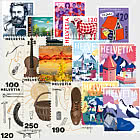
With hand and heart
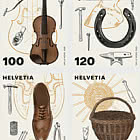
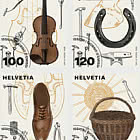
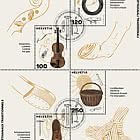
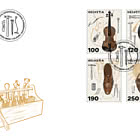
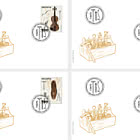
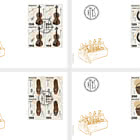
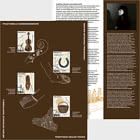
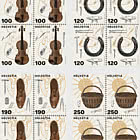
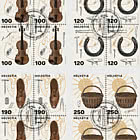
This set is dedicated to a selection of traditional skilled trades that still have their place in today’s often fast paced, digital world.
For many young people, a new stage of life will begin this summer with the start of their career. The apprenticeship to become a commercial banking employee is particularly popular. This is followed, at a considerable distance, by training in construction, building construction, civil engineering, social work and counselling. But what about rare trades, particularly traditional crafts?
Rare trades in Switzerland
Professions with a maximum of 40 apprentices in a three year programme or 60 in a four-year programme are classified as
“rare trades”. “Out of the 300 or so different apprenticeships in Switzerland, around 60 belong to this category,” explains Romain Rosset, Chair of the Swiss rare trades network association. He stresses that “rare” doesn’t necessarily mean “declining”:
“Some rare trades are growing, such as hearing aid acoustician, Federal VET Diploma, or cable car mechatronics technician, Federal VET Diploma.” The association founded in 2019 promotes rare trades that are often associated with particular challenges: apprentices frequently complete their training far from home, while small companies carry a heavy administrative burden. For this reason, the network specifically strengthens coopera- tion between companies.
With tools and passion
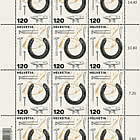
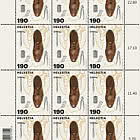
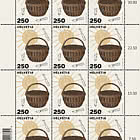
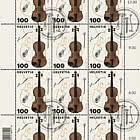
Only a handful of apprentices per year enter the traditional skilled trades shown in the stamp designs. “And yet their skills are in demand. Otherwise, who else will shoe horses, repair instruments or mend shoes in future?”, asks Romain. Four apprentices explain why they deliberately decided to go down this path and what they love about it.
Zippora Jelinek, 21,
trainee violin maker, Federal VET Diploma
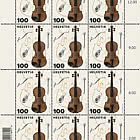
“As I started playing the cello at the age of six, I often used to go to a violin-making workshop that I found absolutely fascinating. At high school, I had the idea of combining my passion for music with my creative flair. So I deliberately opted for a violin-making appren- ticeship instead of a degree. Besides working in the workshop, we learn about physics, chemistry and acoustics, as well as music history and theory. We also all have violin lessons. Together with two other appren- tices, I’m currently making a viola for the Conservatoire de Paris, according to the Stradivari method.”
Leo Cordes, 18,
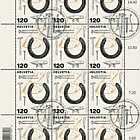
trainee blacksmith, Federal VET Diploma
“I’ve loved horses since I was a child and I’ve always been fascinated by farriery. The combination of precision, anatomical understanding and working with hot iron makes the profession particularly special. Maintaining hoof health and helping horses to be successful in sport give me a sense of fulfilment. I’m currently preparing for the inter- company course and for SwissSkills by working on various farriery and blacksmithing tasks. Later, I want to work for myself and run my own riding stable focusing on equestrian sports.”
Selina Meier, 18,
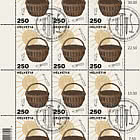
trainee basket and wickerwork designer, Federal VET Diploma
“I stumbled upon this profession by chance, while looking through a list of professions I had no idea it still existed. During the taster experience, I was immediately hooked. I’m fascinated by manual work and its diversity it would take a whole lifetime to learn all the techniques. Right now, I’m working on ten baskets for a mountain hut. I think it’s great to keep this traditional craft alive. In future, I’d like to travel and maybe do another training course to have a steady income so that I can work for myself later on.”
Regula Rohner, 39,
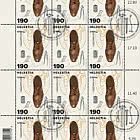
trainee shoemaker, Federal VET Diploma
“My journey to becoming a shoemaker is a long story. First of all I studied textile design. During a gap year with a shoe designer, I realized I wanted to specialize in a craft that makes me feel fulfilled and proud. In my apprenticeship, I learn a lot about repairs, materials, quality standards, management and making shoes from scratch. As a shoemaker, I can achieve my full potential by working independently, creating my own collections, organizing fashion shows, teaching courses and fostering a creative haven.”