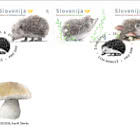
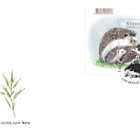
Northern White-breasted Hedgehog (Erinaceus concolor)
The northern white-breasted hedgehog is a small mammal of the order Eulipotyphla (insectivores), recognizable by its stocky body, short legs, and characteristic spines covering its back and flanks. Adults weigh between 600 and 1,200 grams, with males generally being slightly larger. The underside of the body is covered in soft, lighter-colored fur, which often forms a distinctive white patch on the chest the feature from which the species derives its name. The spines are dark brown to black with lighter tips and serve as an effective defense against predators.
The northern white-breasted hedgehog is a pronounced omnivore, although the majority of its diet consists of invertebrates, particularly insects, earthworms, snails, and their larvae. It also occasionally feeds on small vertebrates, eggs, fruit, and other plant matter. The hedgehog is primarily nocturnal, leaving its hiding place to forage for food. During the day, it rests in a nest constructed from dry leaves, grass, or other plant materials, often sheltered by bushes, hedges, or piles of branches. In winter, it enters hibernation, which can last for several months depending on weather conditions and food availability.
Hedgehogs are not strictly territorial animals; however, individuals utilize specific home ranges that may partially overlap with those of other individuals. The size of the home range depends on habitat quality and food availability. Reproduction occurs once a year. Mating begins in late spring or early summer, and after a gestation period of approximately five weeks, the female gives birth to three to six young. The young are born blind and without developed spines which appear shortly after birth and remain with their mother for several weeks until they become independent. It spends the winter in hibernation. During sleep, its body temperature drops to 4°C (compared to a normal temperature of 34°C), its heart beats 20 times per minute (compared to 190 times in an active animal), and it takes 10 breaths per minute. The average lifespan of hedgehogs in the wild is three to five years, although individual specimens can live longer.
When threatened, it curls into a ball and erects its spines. The natural predators of the northern white-breasted hedgehog are primarily carnivores such as foxes and badgers, as well as certain birds of prey and owls. In human dominated environments, significant threats include traffic, the use of pesticides, and habitat loss due to intensive agriculture and urbanization.
The northern white-breasted hedgehog is distributed across Eastern and Central Europe. In Slovenia, it is common and widespread, particularly in lowlands and hilly areas. It prefers mosaic landscapes featuring a mix of meadows, gardens, forest edges, and human settlements. It is also frequently found near human habitation, where it takes advantage of diverse food sources and shelter. As a key component of the ecosystem, the white breasted hedgehog plays an important role in regulating populations of insects and other invertebrates. In doing so, it contributes to maintaining the natural balance and can also have a positive impact by reducing certain pests in agriculture and gardens.
Asst. Prof. Dr. Hubert Potočnik,
Department of Biology,
Biotechnical Faculty