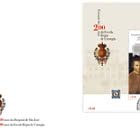
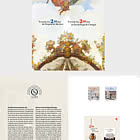
250 Years of the Hospital de São José
Following the 1755 Earthquake and the fires that followed, the Hospital Real de Todos-os-Santos, located near Rossio, was severely damaged. Although its preservation was initially envisaged in the reconstruction plans for the Baixa Pombalina - and restoration works on the building began only a few weeks later - this ultimately did not come to pass.
In September 1769, by royal decree, the former Colégio de Santo Antão-o-Novo was placed under the administration of the Hospital Real de Todos-os-Santos, with a view to carrying out the necessary adaptations to facilitate the hospital’s relocation to that site. Built in the last quarter of the 16th century, that former Jesuit house had been vacant since 1759, following the expulsion of the Companhia de Jesus (Society of Jesus) as part of the Távoras affair, and a public hospital for the sick had been temporarily established there.
Featuring several architectural elements of particular relevance from a public health perspective - a recurring concern in buildings erected under Jesuit initiative - the college was then chosen to house the Hospital Real de Todos-os-Santos. The transfer took place on 3, 4 and 5 April 1775, marking the birth of São José Hospital, named in honour of its royal founder.
200 Years of Escola Régia de Cirurgia
Although the practical teaching of medicine in Portugal has its origins in the Hospital Real de Todos-os-Santos (as set out in its regulations of 1504), a formal school for that purpose was never created. Following the transfer to Hospital Real de São José, the idea began to take shape through the initiative of Dr Manuel Constâncio, head of the Anatomy Class. Having died in 1817, he did not live to see the Escola Régia de Cirurgia, which was finally established by his disciples in 1825. A few years later, as part of the educational reform introduced in 1836 by Passos Manuel, the Escola Régia became the Escola Médico-Cirúrgica de Lisboa, a designation that remained until the establishment of the Republic, when it became the Faculdade de Medicina de Lisboa. Throughout this period (1825–1911), the institution was always housed within the premises of the Hospital Real de São José, initially in the hospital wards and, after 1856, in a separate building within the hospital grounds, where a hospice run by the Arrábida friars had previously operated.