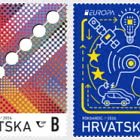
HŽ 6111 / JŽ 411 series electric multiple units
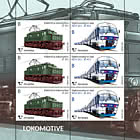
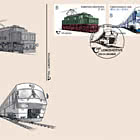
With the introduction of the 25 kV, 50 Hz AC electrification system in the late 1960s, electric traction vehicles designed for this voltage were introduced on Croatian railway lines. At the same time, self-propelled trainsets without locomotives were also placed in service. Electric multiple units were introduced as well, with the JŽ 411 series undoubtedly leaving the greatest mark. Following Croatian independence, these trains were redesignated as the HŽ 6111 series. They remain in service today, and the first units were manufactured in 1976 by the Ganz-MÁVAG factory in Budapest. These electric multiple units were used, and some are still in service today, on the Dobova–Tovarnik line, electrified at 15 kV, 50 Hz in 1970; the Zagreb–Sisak–(Dobrljin)–Novska line, electrified with the same system in 1972; the Zagreb–Koprivnica line from 1981; and the Zagreb–Karlovac–Moravice line from 1986. From 2013 onward, they were also used as far as Rijeka, after the Moravice–Rijeka section was converted from 3 kV DC electrification to 15 kV, 50 Hz AC.
More recently, following the modernization, reconstruction and electrification of the Zaprešić–Zabok railway line, these trains have also been used on that section. In addition to Croatia, these trains were also used in Bosnia and Herzegovina, on the electrified railway lines between Dobrljin and Doboj, as well as between Strizivojna and Vrpolje in Croatia, Bosanski Šamac in Bosnia and Herzegovina, and Sarajevo. During the 1984 Winter Olympic Games, they were fitted out as business-class trains.
Each trainset consists of a powered car in the middle, designated C, and two driving trailer cars, designated A and B, one at each end, forming a train 72.41 m long. A train most commonly consisted of one or two coupled trainsets, and only very rarely three. The train has four traction motors with a total output of 1,300 kW, enabling it to reach a maximum speed of 120 km/h.
These electric multiple units were originally built with interiors providing 236 seats and room for an additional 230 standing passengers. Some were later adapted to accommodate bicycles, while in others the number of seats was reduced to provide more standing room for urban and suburban services. With these characteristics, the trains have played a major role over the past half-century in urban and suburban rail transportation in Zagreb and the surrounding area, as well as in intercity passenger service on electrified railway lines in continental Croatia. Following Croatian independence, a total of 22 trainsets came under the management of Croatian Railways in 1991 and were gradually modernized over time. This electric multiple unit has left an indelible mark on passenger rail transportation in Croatia over the past half-century on lines electrified at 25 kV, 50 Hz, while also being the oldest train of its type.
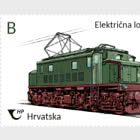
JŽ 361 series electric locomotives
The oldest electrified railway line in Croatia opened to traffic in 1936, exactly 90 years ago, between Šapjane and Rijeka. Until the end of 2012, it operated on a 3 kV DC electrification system, which was then replaced by a 25 kV, 50 Hz AC system. The original electrification was introduced by the Italian State Railways, Ferrovie dello Stato Italiane (FS), which administered the area at the time. Since the Italian railways electrified the first railway line in Croatia, the first electric locomotives also arrived from Italy. These were FS Class E 626 locomotives, which after World War II, under the administration of Yugoslav Railways, were redesignated as the JŽ 361 series.
These electric locomotives were manufactured at several factories in Italy, with most of those intended for use in Yugoslavia and Croatia being produced by CEMSA (Costruzioni Elettro Meccaniche di Saronno) in Saronno, in the Italian region of Lombardy, between 1927 and 1940. After production of this series was discontinued, subsequent series of electric locomotives built after World War II were manufactured at the Ansaldo factory in Genoa.
The main characteristic of the JŽ 361 series, the oldest electric locomotive used on Croatian railway lines, was its Boʾ Boʾ Boʾ wheel arrangement. With a weight of 93 metric tons and a length of 14.95 m, it was equipped with six traction motors with a total output of 1,890 kW (2,570 hp), allowing it to reach a maximum speed of 95 km/h. A total of 448 locomotives of this type were built, 17 of which came under the administration of Yugoslav Railways. On 4 May 1962, 16 of them were taken over by Železniško gospodarstvo (ŽG) Ljubljana, while only one was assigned to Željezničko transportno poduzeće (ŽTP) Zagreb. In Croatia, the locomotive was withdrawn from service in 1967 following the arrival of the new JŽ 362 series locomotives, later designated HŽ 1061. Locomotives of the same series remained in service in Slovenia until 1976, while modernized examples continued to operate in Italy into the 1980s. This locomotive is remembered as the first electric locomotive in Croatia.
dr. sc. Josip Kajinić,
Research Associate, Curator