Rare animals
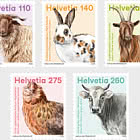
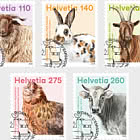
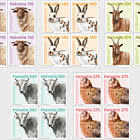
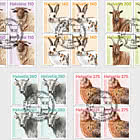
Five illustrations, five ancient Swiss animal breeds with one thing in common: they are endangered livestock breeds protected by ProSpecieRara.
The five animals featured in the designs are considered endan- gered for various reasons a very small population, declining numbers, severely restricted geographic range or genetic factors. And they have something else in common: they are traditional native breeds that have an agricultural or socio cultural connection to Switzerland. These two characteristics make the five animals ProSpecieRara breeds. Let’s take a closer look.
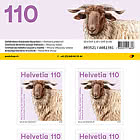
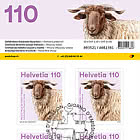
Valais Red sheep
In the mid 1980s, the breed was almost extinct until ProSpecieRara began a breeding project with the last remaining breeders. Today, the Valais Red sheep thrives throughout Switzerland and is considered one of the few surviving Valais sheep breeds. The animals are sturdy, calm, reliable and especially suited to the terrain. Both sexes have spiral horns and slightly curved noses.
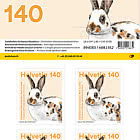
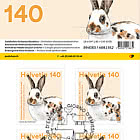
Tricolour small spotted rabbit
There are also endangered breeds among the rabbits bred in Switzerland, for example, the Tricolour small spotted rabbit, stocks of which are currently stable. The colourful breed with black and orange spots on white fur is considered one of the greatest challenges for rabbit breeders. It was created in Winterthur in the mid 20th century by crossing the English Spot with harlequin rabbits.
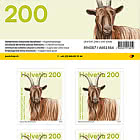
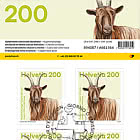
Copperneck goat
In 2006, ProSpecieRara identified a goat that looked like a Valais Blackneck but had a copper brown neck. Research into historical sources suggested that it was the almost forgotten Copperneck goat. Thanks to a conservation project, the population is growing from what was once just 28 remaining animals. The sturdy goats are slim in build, have long hair and strong horns.
Rhaetian Grey cattle
Rhaetian Grey cattle have roots that go back to the lake dwellers. They were once widespread and prized as a breed with three uses (work, milk, meat). They were superseded by the Braunvieh breed by 1920 and later reintroduced from Tirol. The small but sturdy breed is well-suited to extreme locations. Thanks to their small size, historic stables that were too narrow for larger breeds can continue to be used.
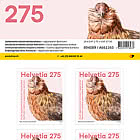
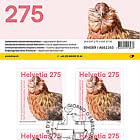
Appenzell bearded hen
Appenzell bearded hens are well suited to the Swiss climate for example, their compact comb offers a smaller target for the winter cold. Although superseded by better layers, ProSpecieRara began a conservation programme with breeders in 1985. Despite small populations and inbreeding problems, the survival chances of the resilient, weatherproof native breed continue to increase. Their characteristic feature is the beard on both sexes.