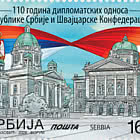
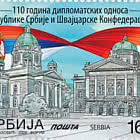
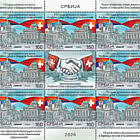
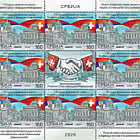
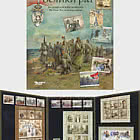
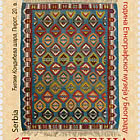
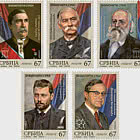
Diplomatic relations between Serbia and Switzerland were established in 1916, during the First World War, when the Kingdom of Serbia appointed Slavko Grujić as its envoy to Switzerland. Ties between the two countries, however, had existed even earlier—particularly in the field of education as Swiss universities served as significant centers for the academic training of Serbian students.
During the First World War, Switzerland as a neutral state and the seat of the International Committee of the Red Cross in Geneva played an important humanitarian role. A special place in the history of relations between the two nations is held by the Swiss scholar Archibald Reiss, who arrived in Serbia in 1914 at the invitation of the Serbian government to investigate crimes committed against civilians. Through his reports and photographs, he documented the suffering of the Serbian people, and he remained with the Serbian army throughout the war. After the war, he continued to live in Serbia and became a great friend to the Serbian people.
In 1919, Switzerland recognized the Kingdom of Serbs, Croats, and Slovenes. During the interwar period, Geneva served as an important hub for Yugoslav diplomacy, as it was the seat of the League of Nations. Following the Second World War, relations with Yugoslavia continued, and after its dissolution, Serbia assumed the bilateral agreements with Switzerland in 2006. Since the 1990s, humanitarian and development cooperation has been developed, and in the 21st century, relations have expanded to include the economy, migration, education, culture, and institutional reforms.
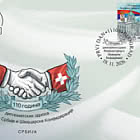
The year 2026 marks the 110th anniversary of the establishment of diplomatic relations between the two states. Swiss President Guy Parmelin visited Serbia on April 27 and 28, which served as an opportunity to further deepen the overall relations between the two countries.