The Belgrade Zoological Garden welcomed its first inhabitants back in 1936, and today it spreads over an area of seven acres of the Belgrade Fortress, and has more than 200 species and 1200 animals. According to the number of natural reproductions, the Belgrade Zoo is at the very top of Europe today.
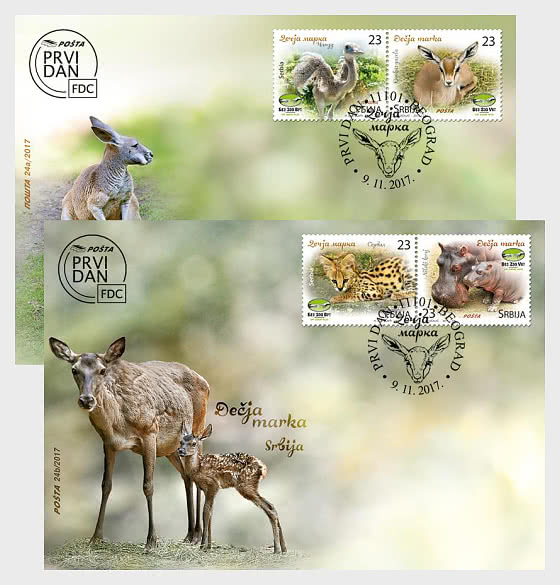
Baby Zoo, within the Belgrade Zoo, was built in 1995 and has been home to various types of baby animals for years. It instantly became a favorite place for visitors, especially the youngest ones. They can see babies of all kinds here and sometimes even have direct contact with some of them. Here, children can play with dwarf goats, raccoon babies, baby servals, and various other species to whom the Baby Zoo is a temporary home.
Nandu
Nandu, 1.5m high and the closest relative of ostrich, is the largest bird of the South American continent. It inhabits grassy steppes and it loves places with at least a bit of high vegetation. During the mating season, nandus live in flocks composed of one male and 5-6 females. The male prepares a nest in which the females lay eggs, and there were cases when there were even 60 eggs in one nest. It is exclusively the male who sits on eggs, and who, after hatching, is the one to take care of the young. Nandu can’t fly, but has unusually long wings for a flightless bird. It uses them like an airplane rudder to avoid enemies from which it saves itself by running away or finding a suitable shelter. However, sufficiently large nandus can also bravely confront their attackers. When grown up, they can run faster than 60 km/h.
Dorcas Gazelle
It mainly inhabits the north of Africa and Israel. It is a small, graceful animal that grows up to about 1m. They live in pairs and if they have plenty of water and vegetation in the habitat, they form herds of one male and a few females. These gazelles give birth almost always to only one fawn that is born with its eyes open and spends its first days curled up in a shade. Later, it follows the mother in search of food. The male doesn’t participate in the care of the offspring except indirectly when it’s necessary to protect the herd.
Dorcas gazelles feed on leaves and herbs, and can spend all of their lives without drinking water – they can get all the necessary fluids from the plants they eat. This animal is very fast, running at speed of over 80 km/h. It is active mostly at night.
Serval
Serval belongs to the family of cats and it inhabits savannahs, dry swards, the edges of tropical rainforests, and even the Sub-Saharan mountain areas of Africa. Its body is of medium size, with an average length of 60cm. It feeds on rodents, birds, eggs, fruits, and insects. Servals are solitary animals, except when breeding. A female gives birth to 2-3 kittens, average weight of about 250g that doubles during the first 11 days. The cubs stay with their mother for up to a year before kicked out to find their own territory. Serval is known for its exceptionally long legs that allow it to jump up to 3m in height, which is why it can often catch a bird in flight.
Hippopotamus
Hippopotamus likes water, which is why the Greeks named it a river horse. It lives in African rivers, lakes and swamps, south of the Sahara. It spends up to 16 hours in the water, protecting itself from the hot African sun, and during nights it moves to the shore to graze on grass and low plants. It is graceful in water and a good swimmer, and can stay under water for 5-6 minutes. Although a solitary animal, a Hippo can form groups of up to 100 members. This is an intelligent and dangerous animal. Males are particularly aggressive in defending their territory, even towards their own offspring. Hippos mate and are born in water. The female usually gives birth to one cub, which weights about 45kg and even suckles under water. They grow up to 3m in length and can weigh up to 2.5 tons. Their lower canines (teeth) grow throughout their lives and can be longer than 50cm and weighing about 2.5kg.