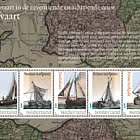
In 2025, PostNL will release the "Shipping in the Seventeenth and Eighteenth Centuries" stamp series. This series consists of eight framed stamp sheets, spread across four periods of the year.
The first two stamp sheets – Merchant Navy and State Fleet – were released on April 1, 2025. The second issue followed on June 3, featuring Coastal Shipping and Flatfish and Trawl Fisheries.
The third issue in this series will be released on August 26, 2025. This consists of the "Hoekwant Fisheries" and "Buurtvaart" stamp sheets.
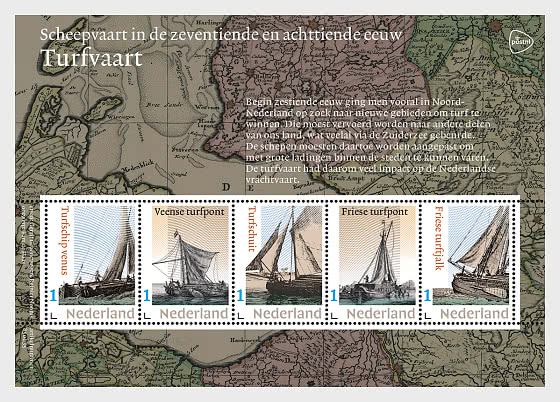
The series will conclude on November 11, 2025, with the "Inland Freight Shipping" and "Turf Shipping" sheets.
Water transport was the most common method of transporting people and goods in the 17th and 18th centuries, and long after. Inland roads were mostly unpaved and impassable for large parts of the year. Water transport required ships. In the 17th and 18th centuries, shipyards built wooden vessels for inland freight, coastal shipping, naval fleets, fishing, and international trade. Dutch shipyards were leading the way in the construction of a wide variety of ships during that period, for both domestic use and for customers elsewhere in Europe. A large portion of Western European merchandise in the early modern period was transported on Dutch ships. At its peak, between 1660 and 1670, the merchant fleet of the Dutch Republic consisted of 2,600 seagoing vessels of over 100 tons. The lucrative Baltic Sea trade (grain, timber) laid the foundation for economic prosperity in the Netherlands, later followed by shipping to Asia. The Republic was also a major fishing power. This was certainly true for the herring fishery (De Groote Visscherij) and whaling (De Kleine Visscherij), each with its own requirements for the construction and size of the ships. Other types of ships were used for coastal shipping and inland transport between cities. In the 17th and 18th centuries, scheduled shipping grew into a large-scale ship transport network, bringing people and goods to inland destinations. In addition to this first form of regulated public transport, the Republic also had a large tramp service for transporting bulk goods and agricultural products by ship.