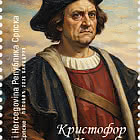
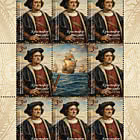
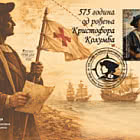
Christopher Columbus played a very important role in world history in the late 15th century. The previous, widely accepted theory was that Columbus was born in Genoa in 1451, into a family of wool weavers. However, it is now thought that he was more likely born in Valencia to a Jewish family. As a young man, he developed a great interest in the sea, navigation, and geography, believing that it was possible to reach Asia by sailing west across the Atlantic Ocean. However, at that time, no one believed that the Earth was round and everyone was afraid that when the ship reached the edge of the Earth's plate, it would sink and everyone would die, so no one wanted to risk financing this voyage. After years of unsuccessful attempts to gain support for his idea, he received help from Queen Isabella I of Spain. With three ships the Santa Maria, the Pinta, and the Niña Columbus set out in 1492 on a voyage that would change the course of history. The exact number of Columbus's companions is unknown, but it is believed that there were about 100 of them. The crew was no different from the others in any way, except for their fear of the unknown. After several weeks of sailing, he reached an island in the Caribbean, believing that he had reached the eastern shores of Asia
Although Columbus never realized that he had discovered a new continent, believing until his death that he had discovered the eastern coast of India, his travels paved the way for European exploration and colonization of America. He made a total of four voyages across the Atlantic during his lifetime. His discoveries had enormous consequences, both positive and negative, especially for the indigenous population.
Despite his enormous contributions to Spain, which acquired rich colonies, Columbus was denied the promised recognition and rewards, and he died in poverty in 1506, unaware of the significance his voyages would have for the future of the world. Today, he is considered one of the most significant and controversial figures in history.