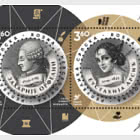
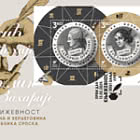
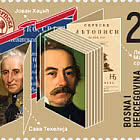
Eustahija Arsic and Zaharije Stefanovic Orfelin were significant Serbian educators and writers. They shared a commitment to education, the enlightenment of the people, and the spread of ideas of reason and morality.
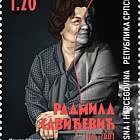
Eustahija Arsic was the first significant Serbian writer and one of the first educated women in Serbian culture. She wrote at a time when it was very difficult for women to participate in public and cultural life, so her work is of particular importance. Arsic dealt with moral, educational and social issues in her works, especially the position of women and the importance of education. Her most famous works are “Mother`s advice” and “Useful Thoughts”, in which she emphasizes the importance of intellect, honesty and learning. She believed that an educated woman contributes to the progress of the family and society as a whole. She wrote in a simple style, with the aim of making her messages understandable to a wide range of readers. She spoke several languages. It was said that she translated Voltaire, Wieland, James Thomson... Just like George Sand, with whom she was often compared, Eustahija published her first literary work anonymously, in Budim, in 1814. She hid her name under one of the two poems that were added at the end of the book. Eustahija Arsic was undoubtedly a forerunner of Serbian (literary) feminism, but also a great benefactor.
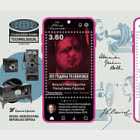
Zaharije Stefanovic Orfelin was among the most significant, but also the most unusual creators that the Serbs have ever had. A teacher, official, poet, graphic artist, lexicographer, naturalist and historian. The beginning of new Serbian literature is associated with Zaharije Orfelin. As one of the most enlightened Serbs of the 18th century, he knew several languages and traveled most of Europe, leaving behind many significant works. He is the author of the famous Calligraphy (1778) and several copper engravings with motifs of Fruska Gora monasteries. His life's work is the two-volume book "The Life of Peter the Great". He edited the first and only issue of the first Serbian magazine "Slavonic-Serbian Magazine", and he also wrote the manual "Experienced Cellar". His contribution to Serbian culture is reflected in the introduction of new literary forms and the spread of the ideas of the Enlightenment.
Author: Nebojsa Djumic
Publisher: Poste Srpske a.d. Banjaluka