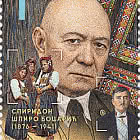
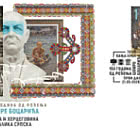
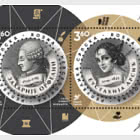
Spiridon Špiro Bocarić was born on May 24, 1876 in Budva, and Banja Luka was the place where he lived and created for many years. Špiro acquired his first knowledge and the charms of the painting craft from his older brother Anastas, also a painter.
He was educated in Venice, where he perfected a special artistic technique, pointillism, which would mark him as a painter.
After his education, he briefly stayed in Novi Sad, later joining his brother Anastas in Mostar, and then his journey took him to Sarajevo. By then he had already become a recognized artist, the founder of civic painting in Bosnia and Herzegovina. In the Sarajevo čaršija, Špiro met the cream of the social elite of the time, especially Petar Čočić, whom he later, as a close friend, encouraged and supported in national work. Due to his frequent association with this Serbian tribune, he was exiled to Banja Luka, where he spent an artistically and socially significant period of his life.
In 1930, in order to respond to the needs of the growing middle class, Svetislav Tisa Milosavljević, the ban of the Vrbaska banovina, made a decision to found the Museum of the Vrbaska banovina, whose first director was Špiro Bocarić. He understood the appointment to this position as a great opportunity to improve the cultural scene of the entire Bosnian Krajina. For 11 years, Bocarić was extremely dedicated to collecting museum materials of inestimable value. The museum was then enriched with a large number of examples of various weapons, richly woven folk costumes, embroideries and tapestries, numerous other items related to numismatics and ornamentation, and he himself donated a large number of his artistic paintings.
Particularly interesting are his studies of the natural beauty, regions and ethnography of the Vrbaska banovina, which resulted in the creation of the first tourist guide of the Vrbaska banovina, then the filming of the documentary film "Towns and regions of the Vrbaska banovina" and the significant ethnographic work "Ornaments of the Vrbaska banovina".
Unfortunately, this prolific artist, who could have given much more to his people and country, ends his life very tragically. After the occupation of Banja Luka, he was arrested and taken to the Jadovno camp...