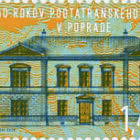
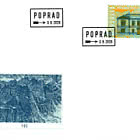
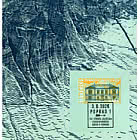
The neoclassic building that houses the Tatra Museum is situated on the edge of the historical centre of Poprad. The current design of the building is the result of several stages of construction and reconstruction. They reflect the development of the museum over more than 150 years.
Its beginnings date back to 1876 when the Hungarian Carpathian Association established its collections, including the first national history collection in Kežmarok. Dávid Husz, who donated a 2-hectare plot in Poprad, funded the construction of the building and together with his wife promised to make an annual contribution of 200 guldens, played a vital role in the foundation of the museum. He fenced the plot at his own expense and for a long period of time supported the idea of the construction of a separate museum building.
After almost ten years of preparation, on 22nd July 1885, the foundation stone of the Tatra Museum in Poprad was finally laid. According to literature, a project designed by Kunda and Jakabfy of Buda, adapted by Gleviczky, a builder from Levoča, was selected from several designs. The construction was executed by Kažimír, an entrepreneur from Kežmarok. The building was constructed following the sumptuous Neo-Renaissance style, typical of representative buildings from the end of the 19th century. It was open to the public on 6th August 1887.
Another significant intervention in the appearance of the museum was related to a hunting exhibition. On 27th March 1926, the board of the Carpathian Association decided to add an annexe. Július Marcsán was appointed to carry out the construction works. The original budget of 54,000 crowns was finally increased to 70,000 crowns. Although the city of Poprad funded the project, it was also necessary to initiate a fund-raising campaign. Once the annexe was completed, the museum boasted two new exhibition halls with a total area of 242 m².
The last major intervention took place in the 1980s, when the administrative premises were built. Today, the museum compound includes the historical building, which is a national cultural monument, and the modern annexe.
The Tatra Museum is among the most significant cultural monuments of the Spiš region and it is one of the dominant architectural examples of Poprad. The building is surrounded by a historical park with mature trees supplemented by more recent additions. It completes the unique character of the museum compound.
Zuzana Homolová