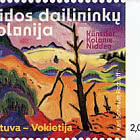
Nida Artists Colony - Joint issue with Germany
| Set |
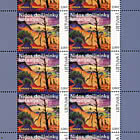
| Sheetlets |
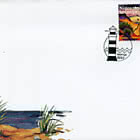
| First Day Cover |
The Nida Artists' Colony is considered the oldest artists' colony on the Baltic coast. Its origins date back to the end of the 19th century, when professors and students of the Königsberg Academy of Arts began spending their summers in Nida. One of the most important creators of the colony is considered to be Ernst Bischof-Kulm, a graduate of the academy, and the hotel founded by Herman Blodė in 1885 eventually became a center for artists' meetings and creativity. At the beginning of the 20th century, Nida had become a favorite place for German artists, intellectuals, and creators. Discussions about art took place here, music was played, and poetry was read. After 1923, when Klaipėda region became part of Lithuania, the landscape of the Curonian Spit also inspired Lithuanian artists, and the spirit of free creativity continued to thrive in Nida.The painting on the new stamp, by Karl Schmidt-Rottluff, was one of the most prominent German expressionists. The Nazi regime classified his work as so-called "degenerate art", and in 1937 hundreds of the artist's works were confiscated or destroyed, and in 1941 he was banned from creating.The beginning of World War II also brought the history of the Nida artists' colony to an end. In 1945, the impressive collection of paintings kept in the house of Herman Blodė was destroyed. Later, the former artists of the colony expressed their longing for the Curonian Spit and the nature of Nida, which had become inaccessible, by painting pictures of their favorite places from memory.
Lithuania - Recommended stamp issues





WOPA+ recommended stamp issues

| Avatar - Fire and Ash |
| Issued: 03.12.2025 |
| ›New Zealand |

| 50th Anniversary of the Founding of the 24th November Bar Scout |
| Issued: 24.11.2025 |
| ›Montenegro |

| Krisjanis Valdemars |
| Issued: 02.12.2025 |
| ›Latvia |


| Sign Language - Good |
| Issued: 02.12.2025 |
| ›Bosnia and Herzegovina - Republic of Srpska |

| In Memory of the Fallen and Murdered on October 7, 2023 |
| Issued: 08.10.2025 |
| ›Israel |


| Annual Collection Folder (New York) |
| Issued: 05.12.2025 |
| ›United Nations |

| Year Set |
| Issued: 24.11.2025 |
| ›Isle of Man |
| Shipping in the 17th and 18th Centuries - Peat Shipping |
| Issued: 05.12.2025 |
| ›Netherlands |