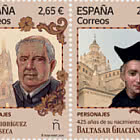
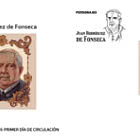
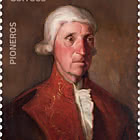
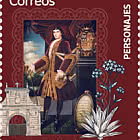
He was a member of a family of Portuguese origin that had gone into exile in Toro following the Battle of Aljubarrota. They had left with the deposed Queen Beatrice of Portugal, losing all their possessions in the process. A century later, the Fonseca family had attained a high status in Castile regarding real estate, properties, and official positions. His uncle Alonso de Fonseca was a chief advisor to Henry IV; his brother Antonio served the Catholic Monarchs and Charles I as a captain in the royal armies; and he himself served as a delegate for matters concerning the Indies and as a diplomat.
The young Juan studied at Salamanca and was a pupil of Nebrija. He received his priestly training under Hernando de Talavera, with whom he worked in Granada. He served as Dean of Seville; Bishop of Badajoz, Córdoba, Palencia, and Burgos; and Archbishop of Rossano in Naples. He was a generous patron of his cathedrals and a promoter of the arts and letters.
As a diplomat, he played a role in the negotiations for the return of Roussillon and Cerdanya to Aragon, in the marriage alliances of Isabella and Ferdinand, and in dealings with Joanna (Juana) in Flanders.
Between 1493 and 1524, all matters concerning the Americas passed across his desk. He organized three voyages for Columbus and every expedition between 1499 and 1524; alongside Cristóbal de Haro, he outfitted the fleet that completed the first circumnavigation of the globe. He was the driving force behind the *Casa de la Contratación* (House of Trade) in Seville (1503) and the *Casa de la Especiería* (Spice House) in A Coruña (1522–29). He opposed Hernán Cortés’s self-aggrandizing agenda. He built the administrative system for the Indies and placed members of his own network in positions of power to safeguard the Crown's interests there. A member of the Royal Council, he was instrumental in the creation of the Council of the Indies and the Council of Finance in 1524. He also promoted laws ensuring the humane treatment of the indigenous population.