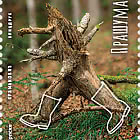
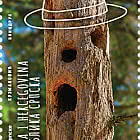
Our country is one of the few in Europe that still possesses primeval forest systems. Primeval forests are defined as forests formed naturally—ecosystems that have grown, lived, regenerated, and died according to the laws of nature, entirely free from human interference. These forests contain trees of all heights, thicknesses, and ages, ranging from the youngest saplings to the oldest giants. New life flourishes upon the remains of naturally fallen trees. Today, our primeval forests are highly valued as rare natural phenomena in Europe, given that they have long since vanished from the vast majority of European countries. Within these forests, all organisms are interconnected through natural food chains and the web of life itself. It is impossible to remove anything from a primeval forest without disrupting its natural balance.
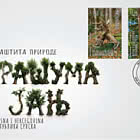
In 2012, the Janj Primeval Forest was designated a strict nature reserve, and it has enjoyed the highest level of protection ever since. In 2021, this protected area achieved the status of a natural site of global significance through its inscription on the UNESCO World Heritage List. The reserve is situated on the western slopes of the Stolovaš massif in the municipality of Šipovo. In the Janj Primeval Forest, humans neither cut down trees nor remove fallen trunks; instead, the trees grow, age, die, and decay naturally. This cycle nourishes the soil and creates a habitat for numerous species of birds, insects, and fungi. The area features a mountain climate characterized by the interaction of maritime and continental air masses, with an average annual temperature of 6.5°C, annual precipitation of 1,200 mm, and a growing season lasting between 140 and 200 days. The beech-fir-spruce forest community is dominant, accounting for 95% of the area. The virgin forest is home to several species of strictly protected mammals and birds, as well as plant species of high biological value.
Human impact is kept to an absolute minimum. All forms of forest management are strictly prohibited, thereby preserving the original genetic pool and allowing nature to develop undisturbed. A first-degree protection regime is in place across the entire "Janj Virgin Forest" strict nature reserve. Activities that could compromise the characteristics for which the area was designated a natural site of global importance such as the picking or destruction of plants; the killing, capture, or disturbance of animals; the introduction of new species; land improvement measures; and various forms of commercial exploitation—are prohibited within the reserve.