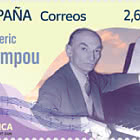
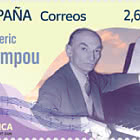
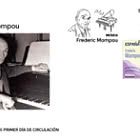
Frederic Mompou, arguably the most globally renowned Catalan musician of our time, was born in Barcelona on April 16, 1893, and passed away in the same city on June 30, 1987. In 1909, while pursuing his piano studies under the tutelage of Pere Serra, he discovered the music of his era at Barcelona’s Sala Mozart during a recital by Gabriel Fauré an experience that awakened his own creative impulse as a composer. Two years of experimentation followed before he discovered his signature chord: a metallic sounding chord reminiscent of the familiar tolling of bells from his grandfather’s foundry, the Fundición Dencausse. Thus began his creative vocation. In October 1911, he traveled to Paris for the first time, remaining there for the entire academic year.
He studied with Ferdinand Motte Lacroix who would later become his primary champion by premiering his works and returned for subsequent terms; however, the outbreak of the First World War forced him to leave Paris and settle with his parents in Barcelona. During this period, he composed works such as *Impresiones íntimas*, *Pessebres*, *Scènes d’enfants*, *Suburbis*, and *Cants màgics*, while also engaging with other young Catalan musicians, including Blancafort, Toldrà, and Gerhard. International recognition began in Paris in 1921, when his teacher, F. Motte-Lacroix, premiered his works in a concert that garnered significant critical acclaim most notably in an article by Émile Vuillermoz published in *Le Temps*.
Mompou’s name began to be mentioned alongside those of French masters such as Ravel, Debussy, Fauré, and Satie. He returned to Barcelona permanently in 1941, where he met the pianist Carmen Bravo, who would become his wife. He resumed composing, bringing an end to a long period of creative inactivity. This marked the beginning of a productive phase that lasted until 1979, when health issues brought his creative work to a permanent end. Mompou’s musical world is one rich in colors, sounds, and images all reflecting the essence of the Catalonia that surrounded him. A quiet, observant man with a gentle voice, he sought through simplicity and conciseness to express the profound emotions hidden within him. His body of work consists primarily of pieces for the piano, alongside compositions for other instruments and, most notably, for the human voice. His songs have earned a place in the 20th century canon. His contributions led to numerous tributes, honors, awards, and publications including the commemorative postage stamp now dedicated to him. Mompou Foundation