2014Art - First Day Cover
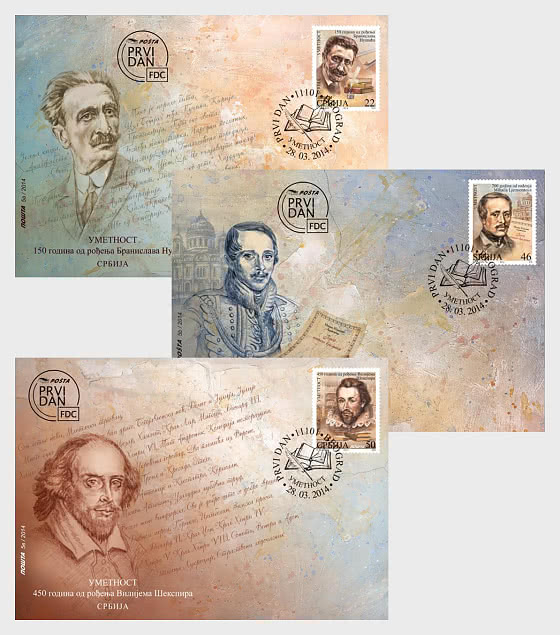
- 28.03.2014
- MA Marina Kalezić, academic painter
Branislav Nušić (Belgrade, 20th October 1864 – Belgrade, 19th January 1938), a comedy writer, playwright, novelist, essayist and founder of modern rhetoric in Serbia and outstanding amateur photographer. Also worked as a journalist and a diplomat. Renowned for his remarkable humour, he wrote about people and their characters. He was born in Belgrade, in the house where today stands the building of the National Bank of Serbia, as Alkibijad Nuša, in Aromanian family of Đorđe and Ljubica Nuša.
He attended elementary school in Smederevo and the first two grades of boarding school, but he graduated from boarding school in Belgrade. Upon turning 18 years of age, he legally changed his name to Branislav Nušić. In 1885, he graduated from the University of Belgrade’s Law School. He became a civil servant in 1889. As an official of the Ministry of Foreign Affairs he was appointed to clerk the consulate in the city of Bitola. He got married in1893 to Darinka, daughter of merchant Božidar and Ljubica Đorđević. He spent a whole decade in the southern Serbia and Macedonia. During his service as Vice-consul in Priština, he left his testimony on suffering of the Serbian people in his work Consul’s Letters. In his vivid career, Nušić was a Secretary in the Ministry of Education, a playwright in the National Theatre in Belgrade, and in 1902 he was appointed as a postal and telegraph commissioner of the first grade in the Ministry of Construction, Postal and Telegraph Department. Also, he was the manager of the Serbian National Theater in Novi Sad, and he founded the theatre in Skopje, where he used to live till 1915. He spent the First World War in exile in Italy, Switzerland and France. After the war, Nušić was appointed as the first manager of the art department of the Ministry of Education, and in 1923 he was appointed the manager of the National Theatre in Sarajevo. In 1927 he returned to Belgrade. He was elected a regular member of the Serbian Royal Academy on 10th February 1933. He died on 19th January 1938, and on that day the facade of the Belgrade National Theatre was wrapped in black canvas. Based on his turbulent life a TV drama was recorded, called Frivolous Branislav Nušić, 1986.
Apart from his name, he published under the alias Ben Akiba, and his most popular works were as follows: dramas: It Had to Be This Way, High Seas, Rental Fee; comedies: Favoritism, The World, A Trip Around the World, The Cabinet Minister’s Wife, The Parliamentarian, Mister Dollar, Bereaved Family, The Deceased, A Suspect Individual, Doctor, Authority (unfinished); novels: County’s Child, Hajducs, 915th, Autobiography; short stories: Political Rival, Eulogy, Class, Tales of a Corporal; tragedies: Knez Ivo of Semberia, Hadzi-Loya, Foundling.
200 years since the birth of Mikhail LermontovMikhail Yuryevich Lermontov (Moscow, October 3 1814 – Pyatigorsk, July 15 1841) was a Russian Romantic writer and poet, known as “the poet of the Caucasus”. Lermontov was born in Moscow, but he grew up in the village of Tarkhany, where his tomb is today. His family is descended from the Scottish family of Learmunt, that moved to Russia in the early 17th century. His grandmother, who raised him because his mother died young and his father was in the army, maid sure that Lermontov got the best schooling.
After finishing high school, Lermontov enrolled into the Moscow University in 1830, but he didn’t stay there long because of his disobedience to a professor. From 1830 till 1834 he attended the military school in Sankt Petersburg, where he became an officer. During that time he wrote a lot of poetry under the influence of Pushkin and Byron. He also took interest in Russian history and medieval epics, which was reflected in The Song of the Merchant Kalashnikov, his long poem Borodino and a series of popular ballads. After the death of Pushkin, in 1837, Lermontov expressed his feelings in his poem addressed to Tsar Nikolai I Pavlovich, demanding the revenge against Pushkin’s murderer. The poem accused the “pillars” of Russian high society for Pushkin’s death. Because of this poem, Nikolai I Pavlovich banished him to Caucasus, where Lermontov had lived before as a boy. He visited Sankt Petersburg in 1838 and in 1839. His doomed love for Varvara Lopukhina was recorded in his unfinished novel Princess Ligovskaya. After the duel with the son of the French ambassador, he was sent back to the army in Caucasus. In 1839 he finished his only novel, A Hero of Our Time, which practically predicted a duel in which Lermontov lost his life two years later.
450 years from the birth of William ShakespeareWilliam Shakespeare (1564-1616) was the greatest writer and dramatist in the english language. His extant works, including some collaborations consist of about 38 plays, 154 sonnets and few poems. His plays have been translated into every major living language and are performed around the world more often than those of any other playwright. Shakespeare was born and brought up in Stratford-upon-Avon. At the age of 18 he married Anne Hathaway with whom he had three children.He had a successful career in London as an actor, writer, and part-owner of a playing company called the “Lord Chamberlain’s Men“ later known as the “King’s men”. With several actors from the troupe he founded his own theater Globe in 1599. He returned to Stratford around 1613 where he died three years later.
Shakespeare wrote mostly comedies and historical dramas till 1950, which he rose to perfection. The first comedy double plots and clear comic sequences (Midsummer Night’s Dream and The Merchant of Venice) was preceded by his best works of this genre - Much Ado About Nothing, As You Like It, Twelfth Night. His first tragedy, Romeo and Juliet, published 1595th and this segment of his oeuvre, which is called his “tragic period” ended the 1599th with Julius Caesar. During this period they are incurred Hamlet, King Lear and Macbeth, theater pieces that are among the best ever written in the English language. Since 1608th to 1613th Shakespeare wrote the tragicomedy (romance). The first recorded work was written in the early nineties of 16th century are Richard III and Henry VI. Although it is very difficult to determine the exact date when Shakespeare’s plays incurred, experts believe that Titus Andronicus, Comedy of misunderstanding, The Taming of the Shrew and Two noblemen from Verona also belong to this period.
Shakespeare was a respected poet and playwright during his life, but his reputation did not rise to its present heights until the 19thcentury. The Romantics, in particular acclaimed Shakespeare’s genius, and the Victorians worshipped Shakespeare with a reverence like idol. In the 20th century his plays are constantly performed in diverse cultural and political contexts throughout the world. Besides the above mentioned, he wrote the tragedies: Troilus and Cressida, Othello, Antony and Cleopatra, Coriolanus, Timon of Athens; comedies: Love’s Labour’s Lost, Merry Wives of Windsor, All’s well that ends well, Measure for measure, Pericles,Prince of Tyre, Cymbeline, Winter’s tale, Tempest, historical dramas: King Richard II, King John, King Henry IV, King Henry V, King Henry VIII; songs: Sonnets, Venus and Adonis, The Rape of Lucrece, The Passionate pilgrim.
Serbia - Recommended stamp issues




WOPA+ recommended stamp issues
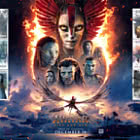
| Avatar - Fire and Ash |
| Issued: 03.12.2025 |
| ›New Zealand |
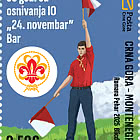
| 50th Anniversary of the Founding of the 24th November Bar Scout |
| Issued: 24.11.2025 |
| ›Montenegro |
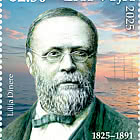
| Krisjanis Valdemars |
| Issued: 02.12.2025 |
| ›Latvia |
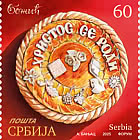

| Sign Language - Good |
| Issued: 02.12.2025 |
| ›Bosnia and Herzegovina - Republic of Srpska |

| In Memory of the Fallen and Murdered on October 7, 2023 |
| Issued: 08.10.2025 |
| ›Israel |

| Annual Collection Folder (New York) |
| Issued: 05.12.2025 |
| ›United Nations |
| Year Set |
| Issued: 24.11.2025 |
| ›Isle of Man |
| Shipping in the 17th and 18th Centuries - Peat Shipping |
| Issued: 05.12.2025 |
| ›Netherlands |