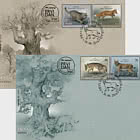
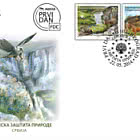
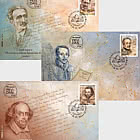
2014Science - First Day Cover
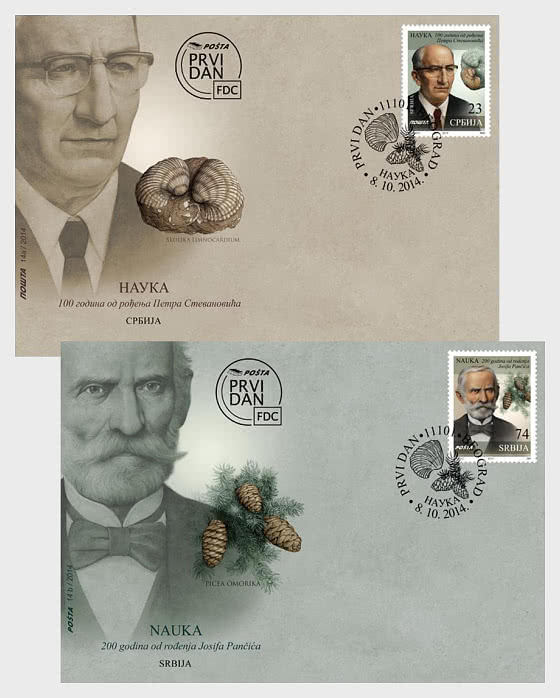
- 08.10.2014
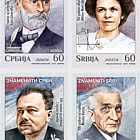
Petar Stevanović, professor of geology at the University of Belgrade, member of the Serbian Academy of Sciences and Arts, president of the Serbian Geological Society, and scientist with high international reputation, is the last student of the prominent Serbian geologist Jovan Žujović.
His career began at the Natural History Museum in Belgrade in 1938, as curator and the head of Geological and paleontological as well as Mineralogical-petrological departments. The period of World War II (1941-1945), he spent imprisoned in the Osnabruck labor camp, Germany. Pedagogical and scientific activities commenced at the Faculty of Philosophy in Belgrade in 1946. He defended his PhD thesis “The Lower Pliocene of Serbia and neighboring areas” at the Moscow Paleontological Institute (USSR) in 1948. He lectured the following subjects: Introduction to independent geological-paleontological investigations, Stratigraphy of Yugoslavia, the Quaternary geology. He was the author of the textbooks: Historical Geology II-the Paleozoic Periods, Historical Geology-the Cenozoic Periods and the Quaternary Geology.
In the field of Neogene stratigraphy of Pannonian Basen, he has introduced the two new substages (time-intervals), the Portaferrian (the Upper Pontian) and the Serbian (the Upper Pannonian) and identified forty taxa, new for science (bivalve and gastropod species and subspecies). During his long-lasting geological field research, he discovered new fossiliferous localities of different geological age in the Belgrade area, Kolubara Basin, Kostolac, Krupanj, Koceljeva, Loznica and Timočka krajina. Good knowledge of several languages (Russian, French, German) enabled him to follow successfully the achievements in geosciences and to participate in many international expert teams and committees. His first scientific article was issued in 1937, and up to 1999. he published more than 200 scientific and professional papers.
He was appointed as a member of the Yugoslav Academy of Sciences and Arts, the Slovenian Academy of Sciences and Arts, and the Academy of Sciences of Bosnia and Herzegovina, as well as the honorary member of the Hungarian Geological Society and the Paleontological Society of the German Federal Republic. His successful and fruitful work has been awarded by several orders and rewards (Order of Labor with the Golden Wreath, two October Prizes of City of Belgrade, “Seventh July Prize”). Owing to the great working capacity and self-discipline, he has achieved excellent scientific outcomes and made significant contributions to: developing and enhancing the geology school and geological education in Serbia, teaching and training of generations of geologists and paleontologists promoting and popularizing the geology and geosciences; developing the museology, and conserving and preserving the geological heritage of Serbia.
Expert cooperation: Aleksandra Maran Stevanović, Museum of Natural History
200 years from the birth of Josif Pančić (Ugrine: 1814 – Belgrade: 1888)When he decided to take up botany, Pančić never dreamed it would lead him to Serbia, where he would become the most renowned botanist and one of the great men of Serbian science. He fell in love with nature as a child, and his desire to learn as much of it as possible lead him through Gospić, Rijeka and Zagreb to Pest, where he studied and gained his PhD at the Medical Faculty. He came to Serbia in 1846 and stayed forever.
In two of his most significant works, the Flora of the Principality of Serbia (1874) and the Supplement to the Flora of the Principality of Serbia (1884) he listed approximately 68% of the currently known species of Serbian flora. His most important discovery is the omorica (Picea omorika), an endemite and relict conifer unknown to science at the time.
Although he is the most important Serbian botanist and one of the greatest Serbian scientists, Pančić was much more than that. As a medical doctor who spoke several languages (Latin, German, English, French, Italian, Spanish), he was one of the best educated people in Serbia at the time. He is the initiator of naturalist thought and sciences in Serbia because he was the first to undertake complex studies of nature and teach natural sciences and was the professor to the next generation of renowned Serbian naturalists. He wrote natural science textbooks, created professional Serbian language terminology for parts of plants, animal organs and geological phenomena, wrote about the need for careful husbandry over natural resources, wrote the first papers on the fauna of Serbia (printed in Serbia), founded the Jestastvenički [natural sciences] Cabinet, its collection becoming the initial fund of the Museum of Natural History, and founded the first Botanical Garden. He was a renowned and respected public personality: the first president of the Serbian Royal Academy (today the Serbian Academy of Sciences and Arts), six times the rector of the Great School, the first manager of the Botanical Garden, vice-president of the National Assembly, state advisor and Member of Parliament. He was dedicated to improving education and the spread of education and culture. He fought for peace and brotherhood among the Slavic peoples and as a doctor, participated in all the liberation wars fought by the Principality of Serbia at the time. He achieved all this because throughout his life he kept to the belief that “A man with knowledge can be of use to people in many situations, yet ignorance is always harmful to all of society”.
Serbia - Recommended stamp issues



WOPA+ recommended stamp issues

| Avatar - Fire and Ash |
| Issued: 03.12.2025 |
| ›New Zealand |
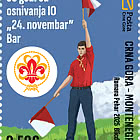
| 50th Anniversary of the Founding of the 24th November Bar Scout |
| Issued: 24.11.2025 |
| ›Montenegro |
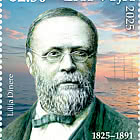
| Krisjanis Valdemars |
| Issued: 02.12.2025 |
| ›Latvia |
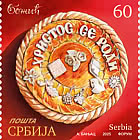

| Sign Language - Good |
| Issued: 02.12.2025 |
| ›Bosnia and Herzegovina - Republic of Srpska |

| In Memory of the Fallen and Murdered on October 7, 2023 |
| Issued: 08.10.2025 |
| ›Israel |

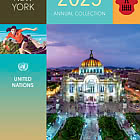
| Annual Collection Folder (New York) |
| Issued: 05.12.2025 |
| ›United Nations |
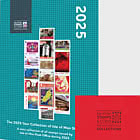
| Year Set |
| Issued: 24.11.2025 |
| ›Isle of Man |
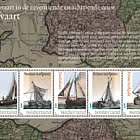
| Shipping in the 17th and 18th Centuries - Peat Shipping |
| Issued: 05.12.2025 |
| ›Netherlands |