Experience Nature - Butterflies Saba
| Sheetlets |

| First Day Cover |

| First Day Cover |

| Presentation Pack |

| Presentation Pack |
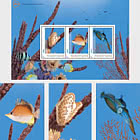
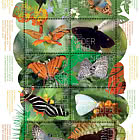
On 30 March 2026, PostNL will issue Experience nature – butterflies Saba, a sheet of 10 stamps in 10 different designs. Each stamp bears denomination 1 for items up to 20 grams with a destination within the Netherlands. The price for a sheet of 10 stamps is €14.00. This stamp sheet featuring the butterflies of Saba is part of the multi-year Experience nature series dedicated to the Caribbean Netherlands from 2024 to 2026. Each year, 4 stamp sheets are released, each with 10 different stamps depicting plants and animals found in this part of the Kingdom. These islands boast an extraordinary biodiversity by Dutch standards, with thousands of plant and animal species.
In 2026, the focus will successively be on birds, butterflies, underwater life and flora of the windward island of Saba. The 2nd stamp sheet, Experience nature butterflies Saba, gives centre stage to the following butterflies: Dorantes Longtail, Mangrove Buckeye, Julia butterfly (orange passionflower butterfly), Caribbean Duskywing, Ruddy Daggerwing, Cassius Blue, Zebra Longwing, Tropical White, Orcus Checkered‑Skipper and Red Rim.
SABA
The island of Saba, like Bonaire and Sint Eustatius, has a special status within the Netherlands. Collectively, these three islands are known as the Caribbean Netherlands. Together with Aruba, Curaçao and Sint Maarten, they form the Caribbean part of the Kingdom of the Netherlands. Saba belongs to the windward islands, a term referring to their position relative to the prevailing north-easterly trade winds. Saba lies 30 kilometres northwest of Sint Eustatius and 45 kilometres southwest of Sint Maarten. Roughly circular, the island measures about 4.5 kilometres across and covers an area of 13 square kilometres. Geologically, Saba is a dormant volcano with four lava domes. Its slopes descend steeply to the sea, and its coastline is rocky. At 870 metres, Mount Scenery is the highest point in the Netherlands. The climate is humid tropical, and the island is covered with secondary rainforest.
North of Saba lies Green Island, a small uninhabited rocky islet that also belongs to the island territory. To the south lies the Saba Bank, an underwater coral island. The Saba Bank is part of the Saba National Marine Park, a marine reserve of 1,300 hectares surrounding the entire coastline. Saba also has a national land park of about 43 hectares. Butterflies on the island are mainly found in areas where flowering plants occur: in gardens, along the edges of the rainforest, in open spaces in the higher mountain zones and along hiking trails. These habitats are characterised by the necessary supply of food (nectar) and shelter. The variation in altitude and microclimate on Saba contributes to the diversity of the approximately 30 butterfly species found on the island.
Source: Saba Conservation Society, Wikipedia.
BUTTERFLIES OF SABA
Butterflies are an order of winged insects, with a total of approximately 160,000 described species. The collective name is Lepidoptera. This word comes from Greek: lepis means scale and ptera means wings. The literal translation is therefore “scale‑winged insects”. The wings of butterflies are indeed covered with scales that absorb light in different ways, creating the visible colours and patterns. Of all butterfly species in the world, around 265 occur in the Caribbean Netherlands, both resident species and occasional visitors. A study of the butterfly fauna of the Dutch Windward Islands Saba, Sint Eustatius and Sint Maarten shows that Saba alone is home to around 30 species. This number does not differ greatly from Sint Eustatius, despite the differences in size, habitability and vegetation. Species numbers on Saba are relatively stable, although threats such as habitat loss, the introduction of exotic species and changes in land use may pose risks.
Source: Saba Conservation Society, Wikipedia
DESIGN
The stamp sheet Experience nature – butterflies Saba was designed by graphic designer Frank Janse from Gouda. All butterflies are portrayed in their natural environment, each on their own stamp. The following 10 butterflies are featured: Dorantes Longtail, Mangrove Buckeye, orange passionflower butterfly, Caribbean Duskywing, Ruddy Daggerwing, Cassius Blue, zebra butterfly, Tropical White, Orcus Checkered‑Skipper and Red Rim. All butterfly photographs are incorporated into a graphic layer with circular forms that also appear on the sheet border. In some places, the images extend onto adjacent stamps and onto the sheet border. In several locations, the designer added graphic elements derived from symbols used on old topographic maps. These symbols indicate features such as landscape formations, contour lines, vegetation, soil structures and waterways. The design is also characterised by an additional transparent layer featuring monochrome images (both white and coloured) of characteristic flora and fauna from this region. These transparent images are rendered in an almost abstract way, extend across the perforations and link the stamps both to one another and to the sheet border. The following plants and animals are depicted in this way: lantana (top left), Monkey Leaf (top right and centre of the sheet), zebra butterfly (centre right) and the caterpillar of the zebra butterfly (bottom left).
TYPOGRAPHY
The typography uses DIN 2014, a typeface designed by Vasily Biryukov from Bulgaria and released by Paratype in 2015. In the captions on the stamp sheet, designer Frank Janse creatively and humorously expresses his associations with the names, traits and appearances of the butterflies depicted.
DESIGNER
The Experience nature series has focused on the plants and animals of the Caribbean Netherlands since 2024. It began with Bonaire in 2024, followed by Sint Eustatius in 2025. This year, it is Saba’s turn. “This island, like Sint Eustatius, is a windward island. They are close to each other and very similar,” says graphic designer Frank Janse from Gouda. “Saba is more volcanic, which means more fertile soil. It is also mainly hilly and mountainous, with fewer plains than Sint Eustatius. Both islands have roughly the same number of butterfly species, despite the difference in size and vegetation. In many cases, they are the same species.”
Selection in advance
For the Experience nature series about the Caribbean Netherlands, a selection of all animals and plants for the islands featured in the series was already made in 2023. In this research, extensive use was made of the Caribbean database of Naturalis in Leiden. “The butterflies were inventoried at that stage as well,” says Janse. “Because of the overlap between the butterfly species on the Windward Islands, we determined the distribution in advance. This allowed us to assign an equal number of beautiful butterflies to each island. When choosing the species, appearance obviously played an important role, but also whether we could include something interesting in the text about behaviour or special characteristics.”
Delicate and fragile
For butterflies, it is mainly the wings that make an impression. The head, antennae and abdomen are less noticeable. “If you focus only on those, you see that it is simply an insect,” says Janse. “I think the popularity of butterflies comes from the fact that they seem so innocent. Their multicoloured wings and patterns make them visually very attractive, and they appear delicate and vulnerable. People also find their way of flying fluttering pleasant to watch. Even the word butterfly flutters. Another advantage is that butterflies generally avoid people, unlike flies or wasps. And butterflies do not sting or bite, which we appreciate.”
Metamorphosis
In addition to their attractive appearance, Janse points to the special reproductive cycle of butterflies, involving metamorphosis: the egg develops into a caterpillar, then into a chrysalis, until the adult butterfly emerges. “For that reason, butterflies are often used as a symbol for a new beginning or resurrection. You sometimes see them on the gravestones of young children, referring to innocence and the brevity of life. They are also often used symbolically in spiritual contexts. In visual art they were a beloved subject for 17th‑century Dutch still‑life painters, who used them to demonstrate their mastery.”
Open and closed wings
Butterflies in flight are difficult to photograph. That is why only photos of butterflies at rest are used on the Experience nature butterflies Saba stamps, most of them with wings spread. “That way they fit perfectly into the landscape‑oriented stamp format,” says Janse. “The upper side of the wings is usually visually more interesting. But if all butterflies on the stamps had their wings spread, the sheet would become monotonous. So I also chose a few butterflies with closed wings. The Dorantes Longtail, for example, because its interesting tail is much more visible in that position. On the Cassius Blue stamp there are even two specimens with closed wings – the underside of their wings is almost as interesting as the upper side. And the Tropical White was chosen because its fine vein structure shows beautifully with closed wings. The photo of this white butterfly looks fresh and lively, with lots of detail.”
Infinite patience
The stamp featuring the orange passionflower butterfly is the busiest, with three butterflies on a single flower. Janse: “All three are sitting with half‑open wings, as if they have just landed. That creates a nice contrast with the other stamps, where the butterflies are in a resting position. I have tried photographing fluttering butterflies myself – many visit my garden – but it is incredibly difficult. They always settle on the one flower that is just too far away to focus on properly. As a butterfly photographer, you need angelic patience until you can make the perfect close‑up. You see that in the photos on these stamps: everything is sharp at the front and diffuse at the back.”
Colour palette
In the colour palette of Experience nature butterflies Saba, yellow, orange and light blue‑lilac dominate, complemented by several darker tones. Many of these colours reappear in the flowers on which the butterflies are perched. The background consists of green tones from the surrounding plants, transitioning from light green at the top to darker shades towards the bottom. “When determining the colour palette, I compared it with the earlier stamp sheets from Bonaire and Sint Eustatius,” says Janse. “They really must differ from one another. I take that into account when choosing the butterfly photos, but also in the colours I use for the monochrome imagery. I have complete freedom with those. In this design I added an extra green accent in the centre of the stamp sheet, using the leaves of the Monkey Leaf plant. The same green returns in the bottom-left margin, with the caterpillar of the zebra butterfly. A beautifully spiky image, showing a caterpillar making its way towards the stamp depicting the zebra butterfly itself.”
Continuous background
Janse also used the monochrome images to create unity within Experience nature butterflies Saba. “Normally I achieve this by allowing some of the main subjects to continue from one stamp onto the next,” he explains. “But with butterflies, that is difficult because of their shape. With the monochrome images, it worked much better. The green tones in the background also continue across the perforations — or rather: they appear to continue. By softening or intensifying colours, you get the impression that a twig or leaf is depicted over two stamps.
“For example, the fern leaf on which the Red Rim sits seems to extend onto the stamp with the Tropical White and even into the circular shape next to it. And the stem of the flower with the passionflower butterflies appears to grow out of the plant on the Ruddy Daggerwing stamp. All of this is suggestion. At the final stage, I added the contour lines of Saba’s coastline in places where there was still room surprisingly many, in fact.”
About the designer
Frank Janse (Vlissingen, 1967) graduated as a graphic designer from the Willem de Kooning Academy in Rotterdam in 2001. Janse specialises in corporate identities, branding, infographics and communication campaigns. Until 2019, he worked for various advertising and design agencies, including Room for ID’s, and independently as Frank Grafisch Ontwerp in Gouda. In 2019, he co-founded Leene Visuele Communicatie with Leene Communicatie, focusing on content and information design. Since late 2022, Janse has been design director at VormVijf in The Hague. VormVijf works for governments, businesses and organisations, with citizens as the main target group. The agency combines strategy, design and content with the ambition to innovate, surprise and create impact. Clients include ministries, Novex Rotterdam Port, the Netherlands Court of Audit, the House of Representatives, the National Delta Programme and the National Glass Museum. On behalf of PostNL, Janse previously designed various luxury stamp storage systems and frame stamps, including themed collections. He also created designs for the Experience nature series from 2018 to 2025. In recent years, Janse has designed several stamps featuring 24-carat gold, including Snoopy 75 years (2025), Regalia of the Kingdom of the Netherlands (2024) and Holland America Line 150 years, Girl with a Pearl Earring and Inauguration of Juliana 1948 (2023).
Netherlands - Recommended stamp issues


WOPA+ recommended stamp issues

| Avatar - Fire and Ash |
| Issued: 03.12.2025 |
| ›New Zealand |
| 50th Anniversary of the Founding of the 24th November Bar Scout |
| Issued: 24.11.2025 |
| ›Montenegro |
| Krisjanis Valdemars |
| Issued: 02.12.2025 |
| ›Latvia |

| Sign Language - Good |
| Issued: 02.12.2025 |
| ›Bosnia and Herzegovina - Republic of Srpska |

| In Memory of the Fallen and Murdered on October 7, 2023 |
| Issued: 08.10.2025 |
| ›Israel |
| Annual Collection Folder (New York) |
| Issued: 05.12.2025 |
| ›United Nations |
| Year Set |
| Issued: 24.11.2025 |
| ›Isle of Man |
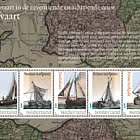
| Shipping in the 17th and 18th Centuries - Peat Shipping |
| Issued: 05.12.2025 |
| ›Netherlands |