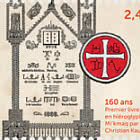
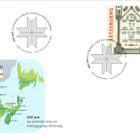
Mi’kmaq is the language of the indigenous nation of the same name, whose settlement area is situated in Atlantic Canada. In addition to the spoken language, they used pictographs out of which the Mi’kmaq hieroglyphic writing system was developed. These pictorial symbols, mostly drawn on birch bark, were used for generations for passing on knowledge. They became the basis for religious texts, and were used as memory aids.
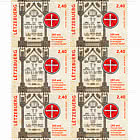
1866 saw the publication of the first printed book in Mi’kmaq hieroglyphs, which was compiled by the Luxembourg missionary Christian Kauder and printed in Vienna. Kauder’s work was written in the context of 19th century missionary literature, but is also the only systematic printed document using Mi’kmaq hieroglyphs. The book has helped to preserve knowledge and a writing system that might otherwise have been lost. Today, Kauder’s work is regarded as an important source for language and cultural research.
Mi’kmaq is still a living language. Although the Latin alphabet is now mostly used, the traditional hieroglyphs remain an integral part of the tradition of the almost 60,000 Mi’kmaq people, serving as visible signs of cultural identity and belonging both during ceremonies, such as the Feast Day of Saint Anne, their patron saint, on 26 July, and in everyday life, e.g. as part of handicrafts, T-shirts, tattoos or even car number plates.