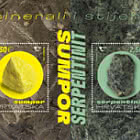
The science that explores the formation and classification of rocks is called petrology. Rocks build the lithosphere, a rocky layerthat encompasses the Earth's crust and the upper part of the Earth's mantle. In terms of their origin, rocks are classified as igneous, sedimentary and metamorphic. Igneous rocks are formed by crystallization or solidification of magma in the interior of the Earth or lava on the surface of the Earth. Sedimentary rocks are created on the surface of the Earth by sedimentation of material formed by the wear of already existing rocks by the action of water, wind or ice, or by sedimentation of residues of organisms, or by chemical sedimentation from supersaturated solutions. Metamorphic rocks are formed by transformation of already existing rocks, whether igneous, sedimentary or even older metamorphic rocks, during which the recrystallization of minerals occurs in a solid state due to the influence of temperature, pressure and fluids. Igneous rocks make up about 95% of the lithosphere, whereas the other two types of rock are only 5% of the lithosphere. Rocks are aggregates of one or more minerals, and a mineral is a natural solid formed by geological processes, with a specific chemical composition and crystal structure, stable under certain temperature and pressure conditions. Minerals are made up of atoms interconnected by different types of chemical bonds that are regularly repeated in space, forming a crystal lattice. Minerals can occur as crystals - as a homogeneous, regular geometric solid with some degree of symmetry, which is a reflection of their regular internal composition, but they occur even more often in nature as different aggregates. All known minerals are divided into classes according to their chemical composition and structural characteristics (I - native elements, II - sulfides, III - sulfosalts, IV - oxides and hydroxides, V - halides, VI - carbonates, VII - nitrates, VIII - borates, IX - phosphates, arsenates and vanadates, X - sulfates, XI - tungstates and molybdates, XII - silicates and XIII - organic compounds) that are defined by a dominant anion or an anion group. Minerals that have the same dominant anion or anion group have many similarities and often occur together in similar geological environments. The scientific study of the chemical composition, crystalline structure and physical properties of minerals, as well as the study of the formation of minerals and their classification, distribution and their use, is called mineralogy.