2026Christmas - Michael Powolny, Ceramic Crib, 1920 - Klosterneuburg Abbey - Set
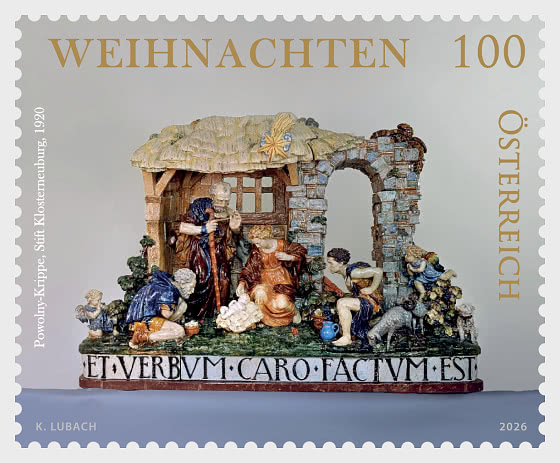
- 27.11.2026
- Kirsten Lubach
- Cartor Security Printers
- Offset printing
- 40.00 x 33.00 mm
- 1.00 euros
Fired art
An unusual ceramic artefact is the colourful Christmas crib made by the sculptor and ceramic designer Michael Powolny.
Michael Powolny was born in Judenburg, Styria, in 1871. He undertook an apprenticeship as a potter and attended the Technical College for the Clay Industry in Znojmo and the Art and Crafts School in Vienna, now the University of Applied Arts. In 1906 he and Bernhard Löffler founded the “Wiener Keramik” company, whose products were soon being sold by the Wiener Werkstätte. From 1909 on, Powolny taught at the Art and Crafts School. He is considered one of the most important ceramics artists of the Viennese Jugendstil movement and is best known for his putto figures. His later works are classified as art deco. However, ceramics was not the only field that Powolny worked in, also working with other materials; as well as working for the Wiener Werkstätte, he also worked for the Augarten porcelain factory and for Lobmeyr glasswares. Michael Powolny passed away in Vienna in 1954.
He created this large Christmas crib scene in 1920 as a commission for Klosterneuburg Abbey. It comprises multiple parts and can therefore simply be assembled and dismantled as needed. The glaze was applied to the raw modelled clay and only subsequently fired. It has a slightly transparent effect. A particularly striking aspect is the depiction of Mary with short hair, no veil and without her classic blue clothing, as well as her central position right in the middle of the crib. The inscription “Et verbum caro factum est” is taken from the gospel according to St. John and means “And the Word became flesh”.
Austria - Recommended stamp issues






WOPA+ recommended stamp issues
| Avatar - Fire and Ash |
| Issued: 03.12.2025 |
| ›New Zealand |
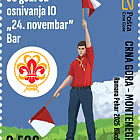
| 50th Anniversary of the Founding of the 24th November Bar Scout |
| Issued: 24.11.2025 |
| ›Montenegro |
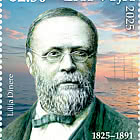
| Krisjanis Valdemars |
| Issued: 02.12.2025 |
| ›Latvia |
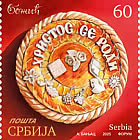

| Sign Language - Good |
| Issued: 02.12.2025 |
| ›Bosnia and Herzegovina - Republic of Srpska |

| In Memory of the Fallen and Murdered on October 7, 2023 |
| Issued: 08.10.2025 |
| ›Israel |
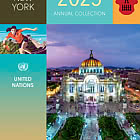
| Annual Collection Folder (New York) |
| Issued: 05.12.2025 |
| ›United Nations |
| Year Set |
| Issued: 24.11.2025 |
| ›Isle of Man |
| Shipping in the 17th and 18th Centuries - Peat Shipping |
| Issued: 05.12.2025 |
| ›Netherlands |