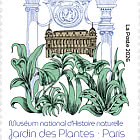
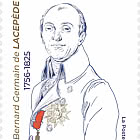
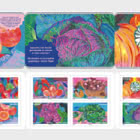
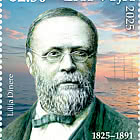
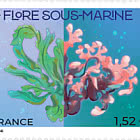
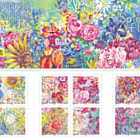
On September 21, 2026, La Poste (the French postal service) issued a stamp celebrating the 400th anniversary of the Jardin des Plantes in Paris.
The National Museum of Natural History (Muséum national d’Histoire naturelle) celebrated its 400th anniversary in 2026. From the 17th-century Royal Garden of Medicinal Plants to the Museum of today, four centuries have shaped the unique character of this institution.
This history, shaped by enlightened scientists and collections enriched over time, provides a powerful tool for understanding the world around us and better grasping the challenges of our time.
At the urging of his physicians, Louis XIII established a Royal Garden of Medicinal Plants in 1626. The institution gradually expanded its scope of natural history studies, relying on talented individuals. In the 18th century, the Count of Buffon, superintendent for nearly 50 years, tirelessly expanded the collections brought back from explorations. Surrounded by leading scientists of his time, he contributed to the prestige of the royal garden and doubled its size. During the French Revolution, the institution reinvented itself: the National Museum of Natural History was created in 1793 by decree of the National Convention. Until the mid-19th century, it reigned supreme throughout Europe, without any real rival.
In the 20th century, it expanded beyond the Jardin des Plantes: botanical gardens, marine stations, archaeological sites, and zoological reserves broadened its scope of activities across France. The Paris Zoological Park, the Musée de l’Homme (Museum of Man), and the Grande Galerie de l’Évolution (Great Gallery of Evolution) were among its notable additions. The 21st century began with a thorough reform of the institution's organization, followed by a major renovation.
Today, drawing on its sites, collections, research, and teaching, the Museum is a leading scientific center. A French and global expert on issues related to nature protection, he is committed on a daily basis to bringing the voice of nature to the widest possible audience.