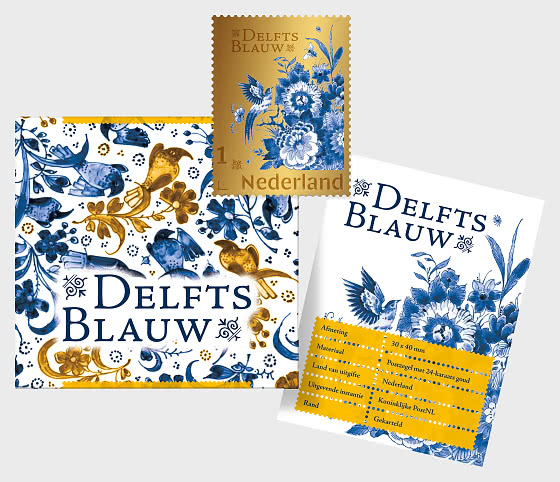
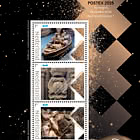
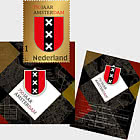
On September 28, 2026, PostNL will issue the "Gold Delft Blue" stamp. Featuring 24-karat gold, this stamp displays a detail from an illustration on a dish from the Royal Delft collection.
Delft Blue is a type of earthenware featuring blue decorations that has been produced in Delft since the 17th century. It is renowned among enthusiasts worldwide, and Delft Blue tiles, decorative plates, tableware, apothecary jars, and vases are exhibited in many museums. The origins of Delft Blue lie with enterprising potters who spotted a gap in the market.
In the 17th century, Chinese blue-and-white porcelain was immensely popular in the Republic of the Seven United Netherlands—as the country was then known. The prosperity of the Dutch "Golden Age" drove a high demand for luxury household items, such as Chinese porcelain. Consequently, the Dutch East India Company (VOC) transported significant quantities of this porcelain to the Republic. Porcelain from the Chinese Ming Dynasty (1368–1644) was particularly popular among wealthy citizens. However, around the mid-17th century, supply issues arose due to political turmoil in China and the fall of the Ming Dynasty. Civil wars and economic decline stalled porcelain production and exports, yet demand within the Republic remained consistently high.
Potters in Delft saw a commercial opportunity in this situation. Although Delft potters could not produce true porcelain, they created something that closely resembled it: refined earthenware finished with a layer of tin glaze, which provided a sheen that seemed to illuminate the white surface. The blue decorations were painted using cobalt oxide. Responding to market demand, the potters drew inspiration from Chinese examples, frequently incorporating Chinese motifs and subjects such as landscapes and floral scrolls. Even when Chinese and Japanese porcelain became widely available again later on, Delft Blue remained popular. By then, it had developed its own distinct style and identity, featuring typically Dutch subjects such as ships and seascapes, windmills, and biblical scenes.
During its heyday, which lasted until the mid-18th century, there were dozens of earthenware factories in Delft. One of the few remaining producers of Delft Blue earthenware is Royal Delft, originally founded as *De Porceleyne Fles* in 1653. Ceramic masterpieces are still produced there today with great craftsmanship and precision.
The 'Gold Delft Blue' stamp follows the 'Delft Blue Ceramics' stamp, which was issued on September 7, 2026, based on a design by Royal Delft.